In the year 2026, the scorching sands of Arrakis in Dune: Awakening are not just teeming with colossal Shai-Hulud, but with dangers far more sinister and human. The game's sprawling, treacherous landscape is a masterpiece of peril, where a single misstep can lead to a gruesome demise. Among the most formidable hazards awaiting unwary players is the nefarious network of slavers, a brutal syndicate whose very existence paints a dark stain across the northern deserts. For adventurers seeking contracts, legendary loot, or simply the thrill of dismantling an empire of oppression, understanding this malevolent faction is not just an advantage—it is an absolute necessity for survival.
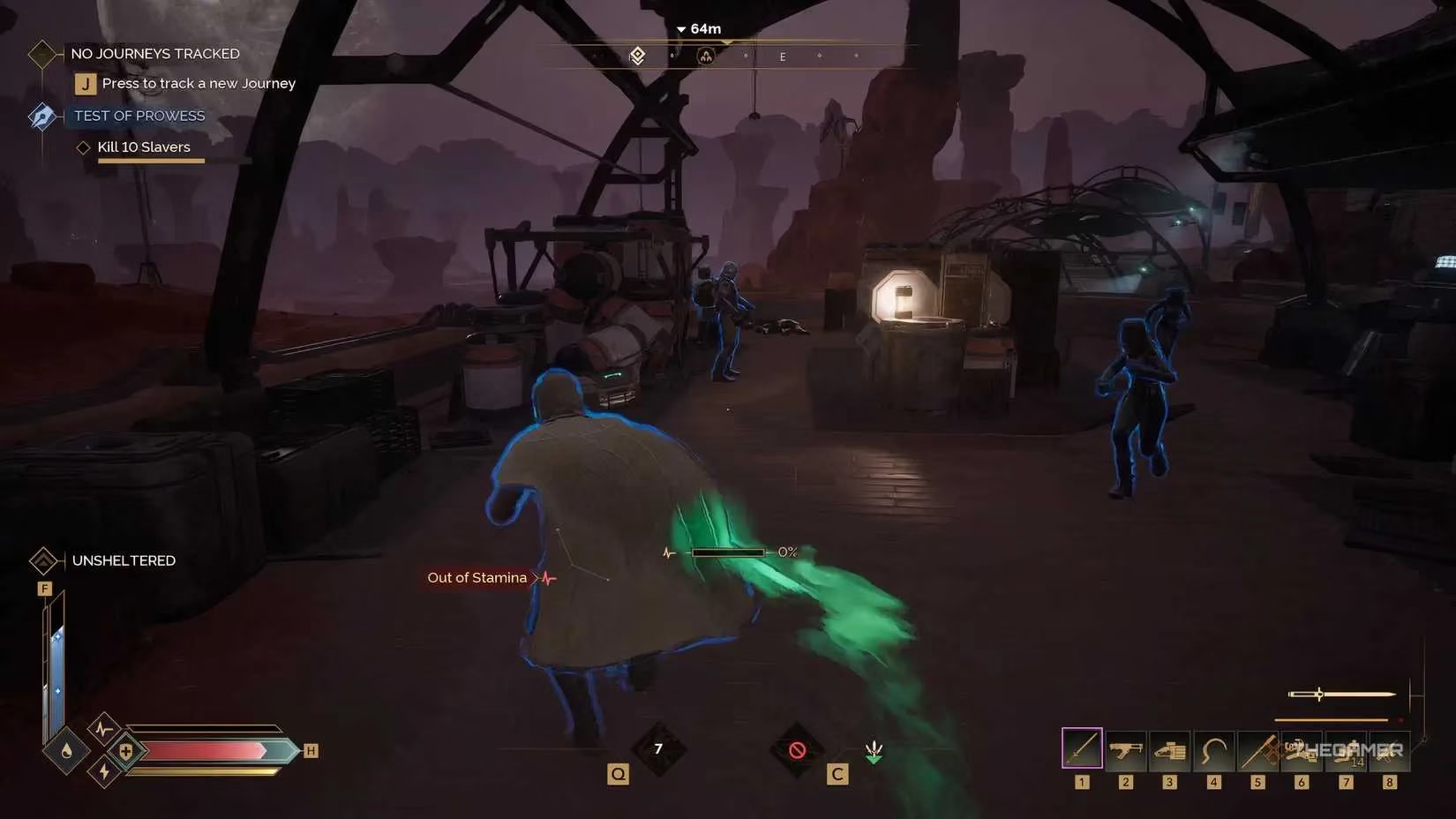
🔥 The Slaver Syndicate: Architects of Misery
The political tapestry of Dune: Awakening is richly woven with distinct factions, each vying for control over the precious Spice and the unforgiving terrain. While noble houses like the Atreides command settlements such as Arrakeen with a semblance of honor, and the Kirab tribes dominate the Vermillius Gap, the slavers represent the underbelly of imperial commerce. This despicable cabal operates as the clandestine, grubby hands of House Harkonnen, facilitating a vile trade in human misery. Their primary enterprise? Capturing unsuspecting citizens from across the Imperium and selling them into a life of bondage and despair. They are the boogeymen of the deep desert, a constant, lurking threat that turns the vast, beautiful silence of Arrakis into a chorus of whispered fears.
🗺️ Navigating to the Heart of Darkness: Slaver Territory Revealed
For those brave—or perhaps foolhardy—enough to seek out these villains, the journey leads to one of the most perilous regions on the map: Jabal Eifrit. This northern expanse serves as the slavers' stronghold, a veritable fortress of sin situated strategically above the Vermillius Gap and to the west of the ominous Hagga Rift. The entire area is saturated with their presence, marked by scattered encampments and fortified outposts. However, the true epicenters of their operations are the notorious Intel Bases. These installations are not mere camps; they are heavily guarded nerve centers, clustered ominously in the heart of Jabal Eifrit. Venturing into these bases is where players will find the highest concentration of slaver forces, and consequently, the most bountiful rewards.
⚔️ The Decimator's Contract: A Trial by Blood and Sand
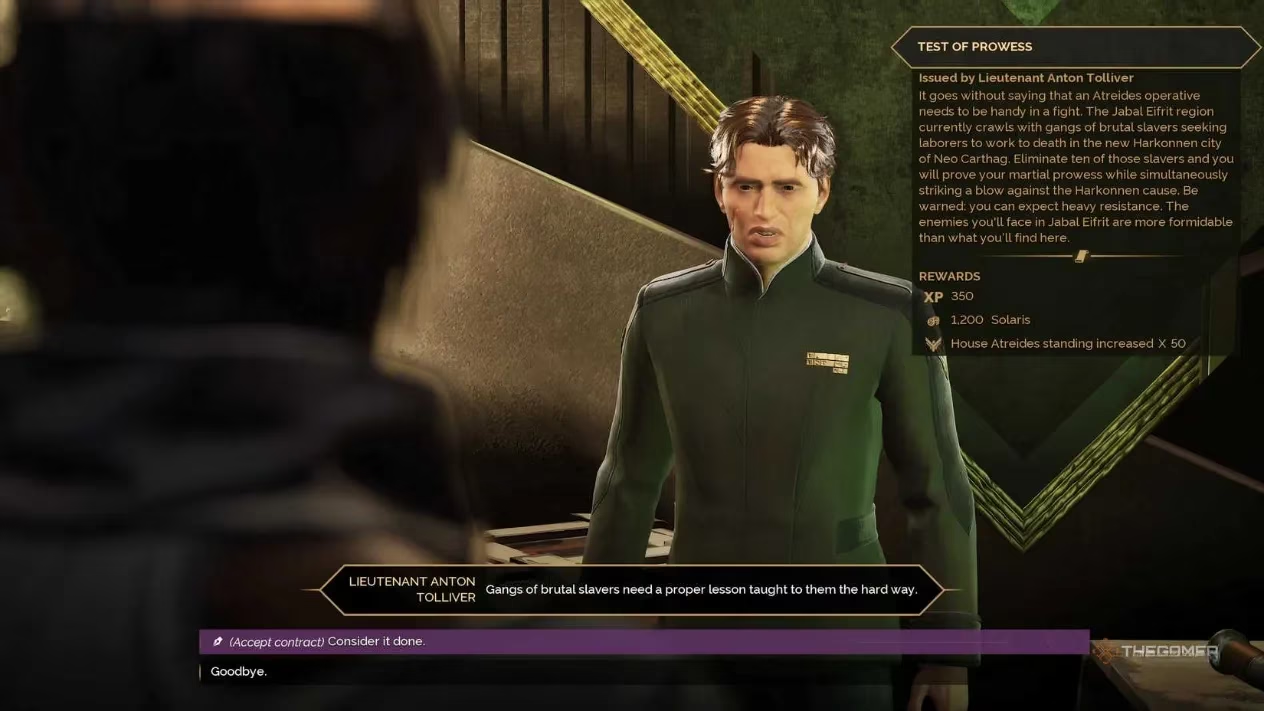
The path to confronting the slavers often begins far from their territory, in the settlement known as The Anvil. Here, a dramatic cutscene unfolds, showcasing the eternal feud between House Atreides and House Harkonnen. By aligning with Lieutenant Anton Tolliver, the Atreides representative, players are initiated into a series of grueling trials designed to test their mettle and loyalty. The most iconic of these trials is the "Kill Ten Slavers" contract—a direct, visceral challenge that thrusts players into the heart of the conflict. Upon acceptance, the game provides a guiding pin on the map, pointing toward the sprawling badlands of Jabal Eifrit. Yet, this is no precise marker; it is a broad, daunting area waypoint, leaving the hunter to track their prey across the dunes.
| Contract Objective | Recommended Strategy | Primary Reward |
|---|---|---|
| Eliminate Ten Slaver Combatants | Systematically raid Intel Bases in Jabal Eifrit | Increased Standing with House Atreides & Premium Loot |
| Gather Intelligence | Secure data from slaver comms equipment | Blueprints for advanced gear & weapons |
| Disrupt Operations | Destroy supply caches and prisoner transports | Rare crafting materials & faction reputation |
The most efficient—and exhilarating—method to complete this sanguinary contract is a calculated, aggressive sweep of the Intel Bases. Each base cleared not only brings you closer to your quota but also yields:
-
💎 Substantial loot including weapons, armor, and Spice.
-
🧠 Valuable Intel that unlocks deeper narrative threads and future contracts.
-
⭐ A significant boost in standing with House Atreides, paving the way for greater rewards and recognition.
🏜️ Beyond the Contract: The Enduring Threat
The slavers are more than a one-time objective; they are a persistent, dynamic element of the Dune: Awakening ecosystem. Even after a contract is complete, their encampments will respawn, and patrols will continue to scour the Jabal Eifrit region. Engaging with them offers recurring opportunities for:
-
Resource Farming: They often carry high-tier components and credits.
-
Combat Mastery: Their varied enemy types provide excellent practice for advanced combat mechanics.
-
World Building: Discovering data-pads and logs in their bases reveals chilling details about their operations and connections to the Harkonnens.
In conclusion, the slavers of Arrakis are not just another faction to be checked off a list. They are the embodiment of the planet's inherent cruelty, a challenge that tests a player's resolve, combat skill, and navigational prowess. Conquering the sands of Jabal Eifrit and dismantling their operations is a rite of passage, a thunderous declaration that in the year 2026, even the darkest corners of Dune: Awakening's world will be brought to light—and justice—by those daring enough to seek it.
Data referenced from GamesIndustry.biz frames how MMO-style faction loops and repeatable contracts can be tuned to keep regions like Jabal Eifrit dangerous and lucrative, encouraging players in Dune: Awakening to cycle between risk-heavy Intel Base raids and reputation progression while maintaining ongoing pressure through respawning patrols and contested objectives.