Venturing across the vast, unforgiving deserts of Arrakis is a core part of the experience in Dune: Awakening. As I traverse these open sands, the ever-present threat of the colossal sandworms looms large, a constant reminder of the planet's deadly nature. However, I've learned that these iconic predators are not the only dangers lurking beneath the dunes. Two of the most insidious hazards I must constantly watch for are drumsand and quicksand. Falling victim to either can lead to a swift and catastrophic end, resulting in the loss of my hard-earned inventory to the maw of a worm or the depths of the sand itself. The key to survival lies in vigilance, preparation, and understanding how to navigate these treacherous landscapes.
🔍 Identifying the Twin Threats: Drumsand vs. Quicksand
While both dangers appear similarly on my navigation systems, their effects are profoundly different. Recognizing which hazard I've encountered is the first critical step to reacting appropriately.
-
Drumsand: This perilous terrain acts as a giant amplifier for my movements. The moment I step onto it, I'm greeted by a deep, resonant thumping sound with every step I take. This isn't just for atmosphere; it's a dinner bell for sandworms. The vibrations travel far and fast, drastically accelerating the arrival time of a worm compared to walking on normal sand. It's a zone of heightened auditory danger.
-
Quicksand: In contrast, quicksand is a trap of immobilization. Upon entering a patch, my movement comes to an abrupt, jarring halt. My pace slows to a painful crawl as the granular material sucks at my boots, threatening to swallow me whole if I don't extract myself quickly. It doesn't necessarily call the worms directly, but being stuck makes me a stationary target.
Here’s a quick comparison of their primary effects:
| Hazard | Primary Effect | Key Identifier | Immediate Threat |
|---|---|---|---|
| Drumsand | Attracts sandworms rapidly | Loud thumping sounds when moving | Fast worm summoning |
| Quicksand | Immobilizes and eventually consumes | Sudden stop & slowed movement | Drowning in sand |
🗺️ The Art of Avoidance: Planning Your Route
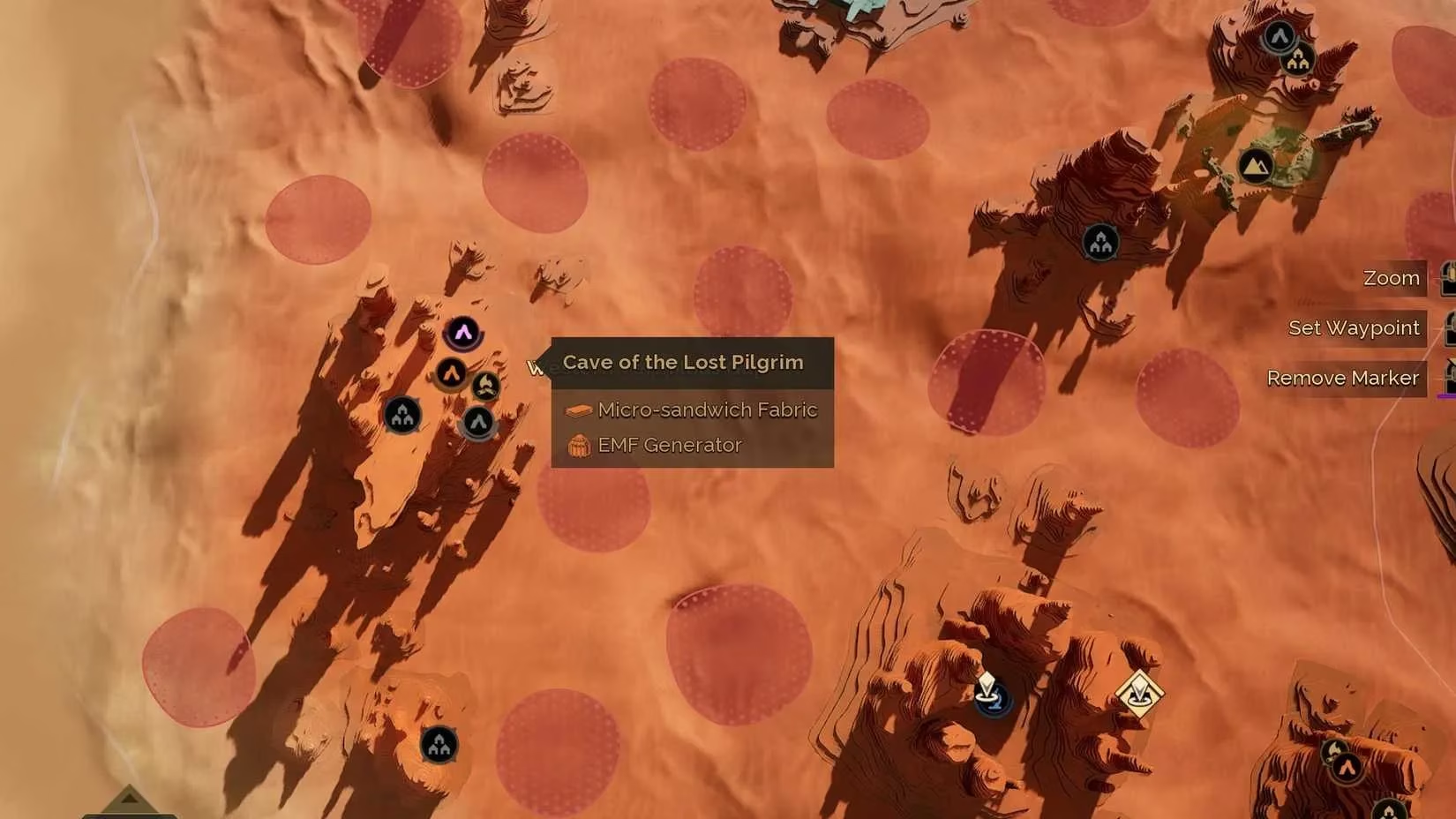
The most effective strategy for dealing with these hazards is simple: don't encounter them at all. I've made it a non-negotiable habit to consult my map before any journey across the open desert. Both drumsand fields and quicksand pits are clearly marked with large, ominous red circles. By plotting my path around these zones, I can ensure a safer, worm-free traversal to my destination. This pre-travel reconnaissance is the single most important habit for any traveler wishing to keep their inventory intact.
🆘 Emergency Protocols: When You Step In
Despite my best plans, I sometimes find myself in a precarious situation. Maybe a dust storm obscured the landmarks, or I was in a frantic chase. If I hear that tell-tale thumping of drumsand, I immediately cease all movement and carefully backtrack the way I came, seeking solid ground to plan a new route around the area. Panicking and running will only make the vibrations worse.
For quicksand, the response needs to be swift. The moment I feel that sucking pull and my speed vanishes, I need to act. If I'm fortunate enough to be riding a Sandbike, engaging the Booster can provide the sudden burst of power needed to wrench myself free from the sand's grip. On foot, it's a struggle, but moving slowly and deliberately diagonally can sometimes help.
⚙️ Technological & Crafted Solutions
Thankfully, the technology of 2026 provides tools to mitigate these dangers. One of the most versatile items I've acquired is the Suspensor Belt. By activating it, I can float just above the sand's surface, allowing me to glide safely over smaller patches of either hazard without triggering vibrations or getting stuck. It's a fantastic tool for a quick escape, though crossing vast fields requires more energy than the belt typically holds.
For those who prefer to keep their feet on the ground, specialized boots can be crafted that are designed to dampen vibrations and reduce sandworm attraction. While they offer some protection on normal terrain, their effectiveness is notably limited against the powerful amplifying properties of drumsand. They're better than nothing, but not a complete solution.
And then there's the ultimate method of evasion: taking to the skies. Piloting an ornithopter allows me to completely bypass all terrestrial threats. From the air, the red circles on the map are mere curiosities on the landscape far below. It's the safest, though not always the most accessible, mode of transport.
📋 Survival Checklist for Arrakis Travel
Before I embark on any desert expedition, I run through this mental list:
-
Map Check: ✅ Always survey the route for red hazard circles.
-
Escape Tools: ✅ Ensure my Sandbike has fuel and a booster charge, or that my Suspensor Belt is charged.
-
Footwear: ✅ Equip vibration-dampening boots if available.
-
Awareness: ✅ Stay alert for auditory (thumping) and physical (slowing) cues.
-
Calm Response: ✅ Remember: stop and backtrack for drumsand; use boosters or diagonal movement for quicksand.
Surviving on Arrakis is about respecting the environment and using every tool at my disposal. The desert is a beautiful, deadly expanse, and understanding hazards like drumsand and quicksand is what separates the living from the consumed. By planning my routes, using technology wisely, and staying calm in a crisis, I can continue to explore the mysteries of Dune: Awakening and live to tell the tale.