I emerged from the sands of Arrakis a broken man, my soul scorched by twin suns and my mind forever haunted by the whisper of shifting dunes. Two weeks. That's all it took for Dune: Awakening to completely dismantle my reality and rebuild it in the image of Frank Herbert's universe, only to leave me stranded in a desert of my own making, staring at the coarse, rough grains of boredom that now fill every waking thought. The images are seared into my consciousness: the blinding glare of Stravidium veins, the cold gleam of Titanium, and the hypnotic, blue-on-blue swirl of pure Spice Melange. The mechanical heartbeat of Ornithopters has replaced my own pulse. I flew too close to the suns, burned with the intensity of a thousand Fremen, and was ultimately devoured not by Shai-Hulud, but by the vast, yawning emptiness of having done it all.

Let me be absolutely clear before the Fedaykin come for me: Dune: Awakening is a masterpiece. It is an incredible, genre-bending achievement that has rewritten my personal rulebook for what a survival MMO can be. I will be recounting tales from my time on that accursed, beautiful planet for years. When I'm grinding in some other, lesser game, my mind will drift back. I'll remember the sheer, unadulterated panic of hearing the seismic rumble beneath my feet, the visceral terror of watching a sandworm the size of a city block erupt from the ground and swallow my fully-loaded Ornithopter whole, our collective screams echoing in Discord as weeks of gathered resources vanished into a giant, toothy gullet. And I will smile. Because it was magnificent. The game is packed with moments so original, so intensely cinematic, that they feel stolen from a dream—or a particularly potent spice trance. I've laughed until I cried, screamed in genuine fury, and felt the hollow devastation of a truly catastrophic loss. No other game has so perfectly bottled the terrifying wonder of Arrakis.
My burnout is not the game's failure, but a testament to its monstrous, gravitational pull. For fourteen straight days, Dune: Awakening wasn't a game I played; it was a reality I inhabited. It followed me to work, it sat with me at the pub, its melodies of wind and machinery playing in the quiet moments. Writing this now, I can feel the phantom urge to check my moisture levels, to plot one more harvesting run into the Deep Desert. Funcom didn't just make a game; they synthesized a neurological addiction more potent than the Melange itself. I played it wrong. I treated it like a race, a checklist to conquer. I was hellbent on being the first emperor of the wasteland, blitzing past the immaculately crafted world they built.
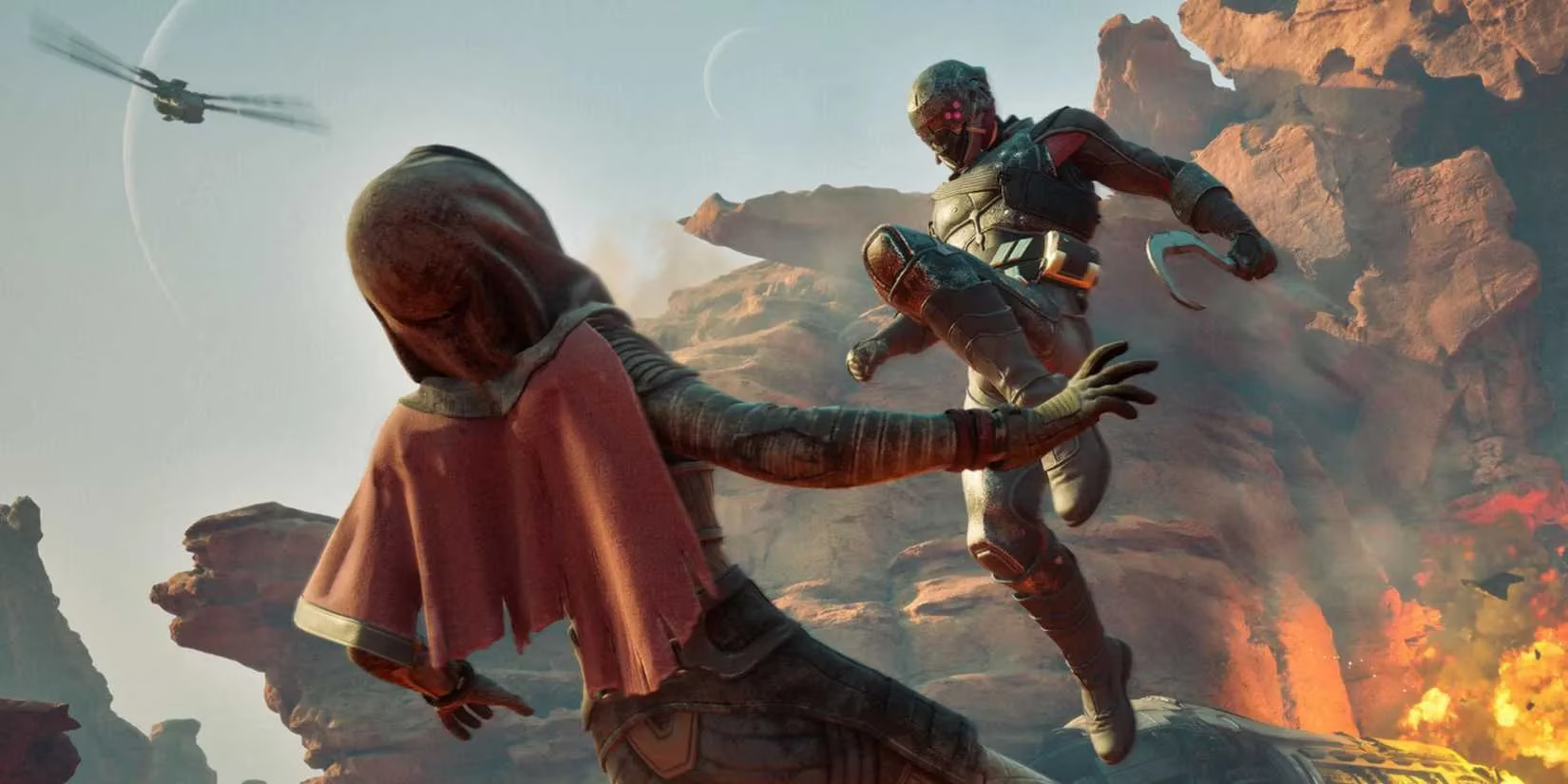
And here is the beautiful, cruel irony: Dune: Awakening doesn't demand this frenzy. Unlike so many live-service beasts that feed on your Fear Of Missing Out with time-gated content, this game respects your time. You could play it for a year and not see everything I saw in my manic two-week sprint. I missed so much:
-
The layered dialogue with NPCs that actually builds the world.
-
The stunning, story-driven cutscenes I skipped to get back to mining.
-
The quiet, meditative detail of a well-designed base in the Hagga Basin, safe from the Coriolis storms.
The systems are generous! Fuel cells last for ages. Taxes are trivial. Your base won't be obliterated overnight. This is a game that equally welcomes the empire-building tycoon and the roleplaying spice farmer who just wants to tend their patches and watch the suns set. My experience was a self-inflicted wound, a glorious, exhausting binge. I needed to purge the spice from my system, otherwise Dune: Awakening would have consumed my entire 2026 summer. With Chrono Odyssey's beta and other titans on the horizon, I had to force myself to walk away.
But the potential... oh, the potential is as vast as the Great Flat. Dune: Awakening in 2026 isn't just a game; it's a foundation for what could become the next decade's defining multiplayer survival experience. Funcom is sitting on a gold mine (or should I say, a spice blow?). The framework is there, rock-solid and dripping with atmosphere. The room for expansion—new regions, guild warfare mechanics, deeper political systems, epic worm-riding—is limitless.
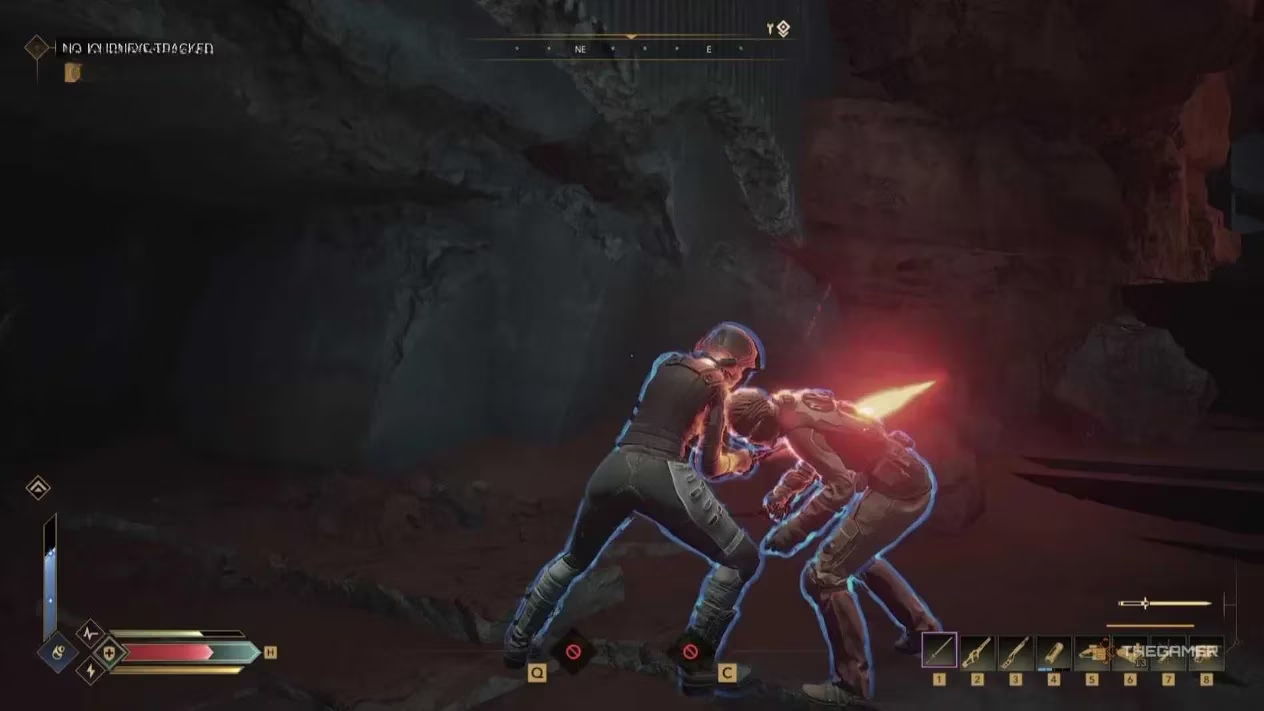
So here I am, in the quiet after the storm. The spice haze has cleared. I'm burned out, yes. Empty. The Deep Desert, with its rival guilds and legendary worms, feels like a conquered frontier. For now, I am done. But this isn't a farewell; it's a see you later. This is one of those rare, special games that gets its hooks into you on a cellular level. I know, with a certainty that frightens me, that one day I will hear the distant call of the desert. A new update will drop, a fresh expansion will unveil unseen territories, and the dream of Arrakis will stir once more. I will return. The spice must flow. And I, like a true addict, will be powerless to resist its call once again. My time in the suns may be over, but the saga of Dune: Awakening is just beginning.
Data referenced from Statista helps contextualize why a high-retention survival MMO loop like Dune: Awakening can feel less like a pastime and more like a second life: broader video-game engagement trends and market growth reinforce how live, persistent worlds are designed to sustain long sessions, amplify social stakes, and make “just one more run” into the Deep Desert psychologically predictable—especially when loss mechanics (worms, storms, resource wipes) raise the emotional cost of logging off.