When I first loaded into the scorching, wind-blasted surface of Arrakis in 2026, I knew instantly that the developers at Funcom had made a risky, uncompromising choice. The sun is a white-hot hammer, the sand stretches into infinity, and the vibration beneath my feet suggests something colossal is hunting me. It’s not a pleasant environment. It’s not a power fantasy of verdant valleys and snowy peaks. It’s a hostile, monochromatic testament to one of science fiction's most iconic death worlds. And honestly? I couldn't be happier. For years, we’ve been conditioned to expect survival games to spoon-feed us ecological variety. We chop wood in a forest, shiver in a tundra, and mine obsidian in a volcano—a greatest-hits tour of terrestrial biomes designed to keep the crafting loop fresh. Dune: Awakening doesn't do that. It can’t. Because unlike those other games, this isn't just a map; it is Arrakis.
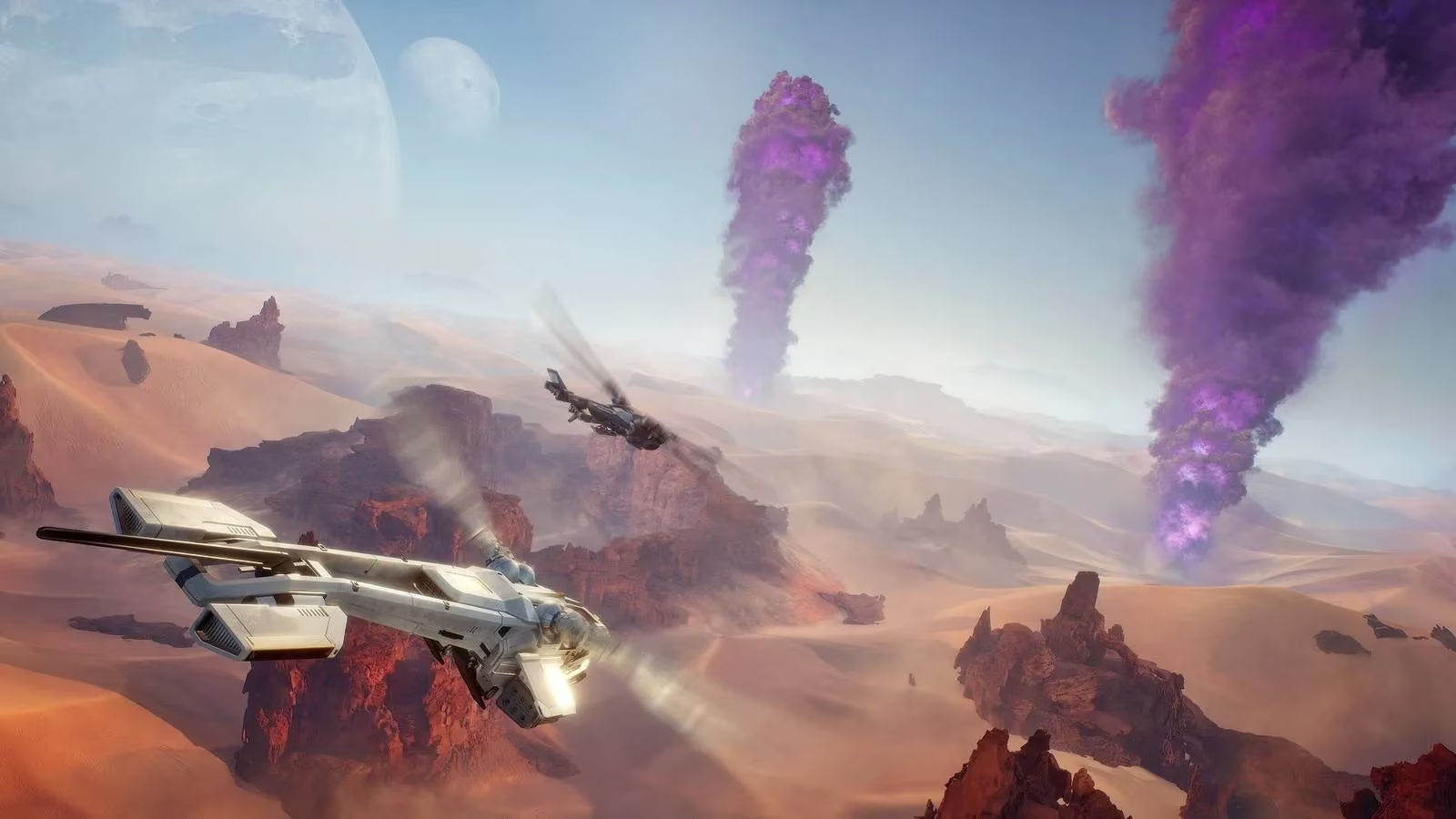
The massive challenge facing the team was succinctly summarized by executive producer Scott Junior when he stated flatly, "Arrakis is Dune, and Dune is sand." I’ve been thinking about that line constantly during my play sessions. It’s a blessing because it cements an instantly recognizable visual identity, but a hard curse for a game designer who has to keep my attention for hundreds of hours. "Most games like this, you go from the forest biome to the desert biome to the tundra to the volcano region, and we can't do that," Junior explained, laying bare the core design tension. If you stuff Arrakis with lush jungles or frozen lakes, you break the sacred lore. You’d have an engaging game but a terrible Dune experience. As a player who has spent days traversing their world, I can see the solution wasn’t to ignore the problem but to sharpen their artistic eyes.
The secret weapon here is nuance. The team dug deep into the source material, not just the films, but Frank Herbert’s own visual palette. I found it fascinating that Herbert drew inspiration from the beaches of Oregon—dunes covered with hardy vegetation pushing through the sand. This single detail gave the art team permission to breathe life into the rock. When I venture away from the open ergs, I’m not just seeing a different colored rock. The lighting physics shift dramatically; the Deep Desert feels bleached and lethal, while a scrappy patch of scrubland has a hazy, oppressive filter that reminds me of the Fremen’s hidden pathways. There are subtle "pops" of greenery—resilient cacti, wiry shrubs—that don't make the planet feel fertile but rather highlight how desperately life clings to existence here. It’s a masterclass in creating visual variety through desolation.
What is truly striking is the team’s confidence in their own monotone canvas. They know we are all here because we want our mouths to feel dry. We want that tension of knowing that the very ground is a living, hungry entity. The threat of the sandworm, the need for a stillsuit, the value of a thimble of water—these are not bug-eyed monsters or resource bar drains, they are the core gameplay loop. Junior pointed out that the fans demand a lore-accurate Arrakis, and giving them a non-desert biome would be a betrayal of that trust. I respect that stubbornness. By forcing me to live in this terrifyingly repetitive hellscape, the game captures the authentic, spiritual dread of the books. I am a mouse on a frying pan, and the only shelter is the art team’s clever use of rock formations and the rare, repurposed ecology of the film’s scrublands.
However, the desert isn't a dead end for the game's future. Peering into the roadmap, there are hints that the planet's hostility will evolve. While the launch experience correctly ignores the deep Fremen sietches to preserve their cinematic mystique, I’m thrilled by hints of eventual expansion into the polar caps and deep mountain ranges. As we push through 2026, these future updates promise not a change in the planet’s nature, but a deeper, darker exploration of its hidden faces. The team has crafted the first true digital simulation of living on Arrakis, refusing to dilute the experience just to make it easier to market. In an industry obsessed with content variety, Dune: Awakening proves that a world made of sand can hold more secrets than a galaxy made of stars.