The moment Funcom pulled back the curtain on Dune: Awakening’s mid- and endgame, it became clear that this is not just another survival-crafting experience bolted onto a dusty Arrakis backdrop. It’s an enormous, shifting, politically charged sandbox where a single weekly reset can turn the entire server upside down. Anyone who thought the journey would end after maxing out their character in the Hagga Basin is in for a shock. The Deep Desert is real, it’s vast, and it’s absolutely terrifying.
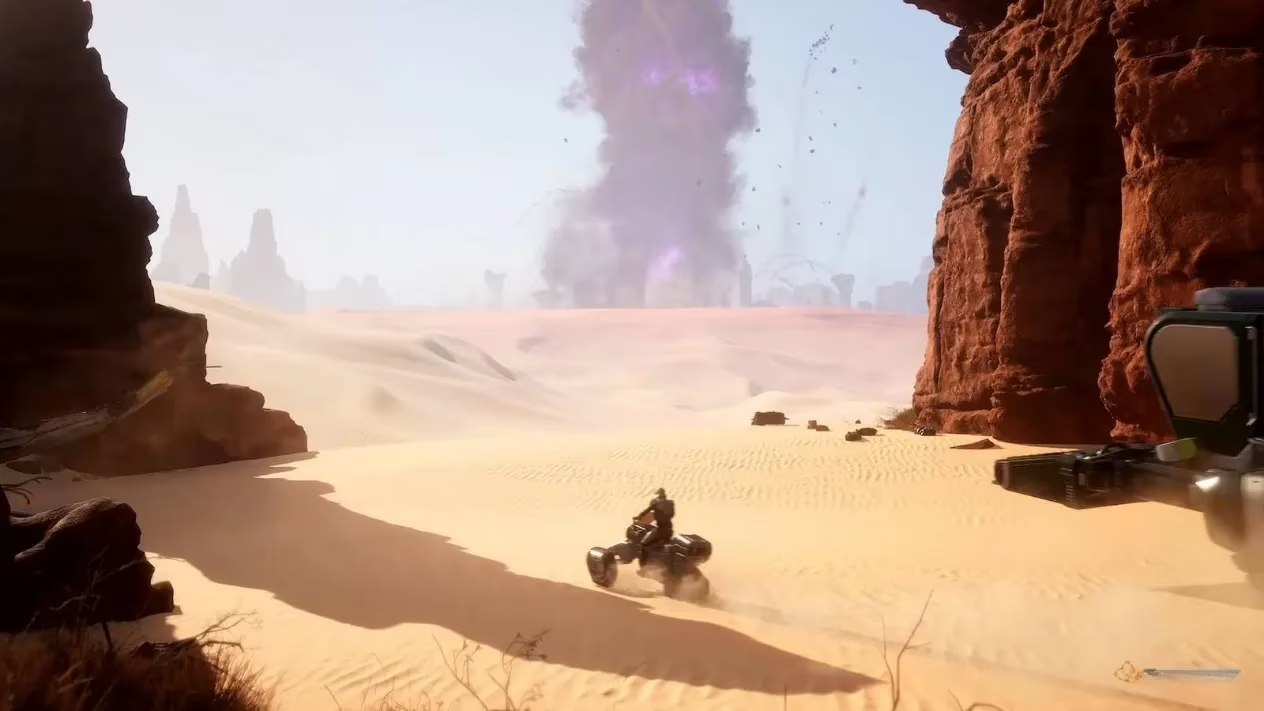
Take a moment to imagine that first step into the Deep Desert. The leveling zones are behind you. Now you’re standing in a connected web of 81 gigantic zones, all stitched together into one massive open PvP region. A single zone already feels immense, so when you multiply that by 81, the map borders on absurdity. Player cap? Up to 300 souls on every Deep Desert server, fed into by over 15 separate Hagga Basin shards. What could possibly make a space that size feel dangerous? The worms. This isn’t the modest sandworm you learned to dodge in the starter areas. At lunchtime on May 27, during a developer livestream, viewers watched a creature four or five times larger rise from the sand. That’s not a worm. That’s a Shai-Halud big enough to swallow an entire spice harvester without even noticing the crew inside.
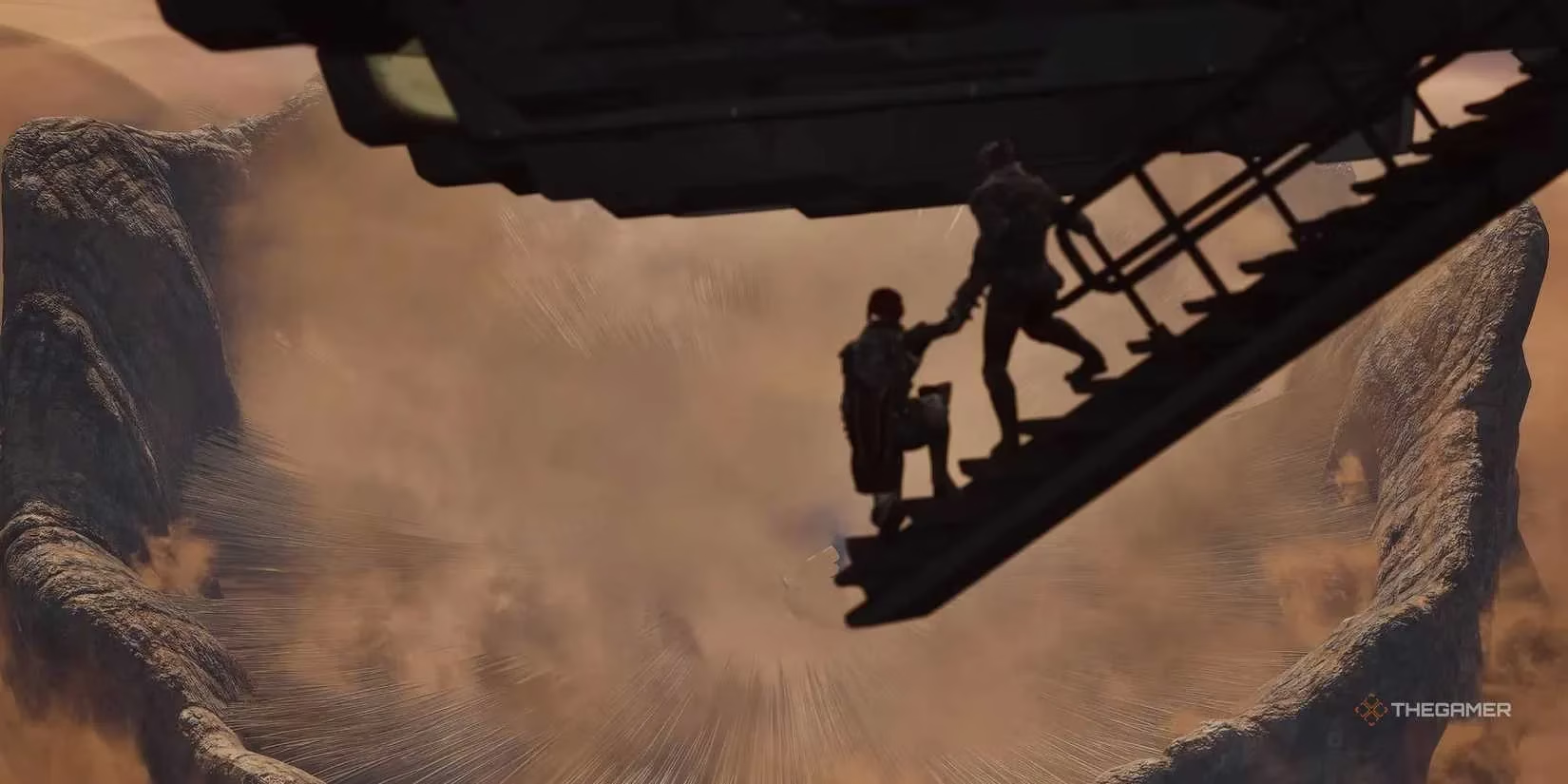
Seeing that beast convinced many that the endgame PvP events will be less about who shoots first and more about who positions safely enough not to become worm food. But here’s the question everyone should be asking: Is the Deep Desert only for bloodthirsty PvP fanatics? Not even close.
Smuggling, Cartography, and a Life Beyond the Gun
PvP isn’t universal tea. Some players simply want to transport illicit cargo in the dead of night, and Dune: Awakening happily offers that. Brief as it was, the livestream mention of “smuggling” sparked genuine excitement. Imagine loading your landcar with spice that needs to move through trade networks quietly, or piloting an ornithopter packed with illegal substances while hostile guilds patrol the skies. That gameplay doesn’t ask you to be the deadliest shot on Arrakis; it asks you to be the cleverest. Why fight a war when you can fuel it from the shadows?
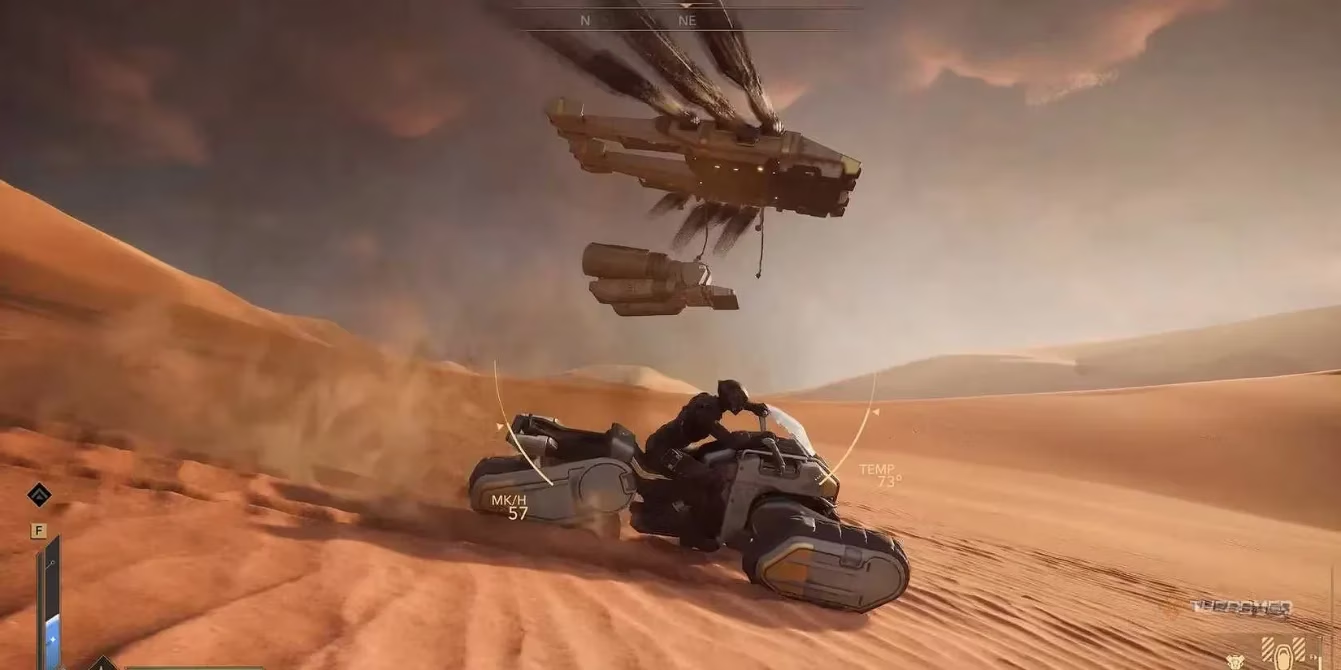
Even smuggling might feel too risky for some. What do you do then? You become a cartographer. Because the Deep Desert doesn’t stay still. Every seven days, those 81 zones reset and completely rearrange themselves. Spice veins you mapped last week? Gone. The lucrative harvest site your guild built a base around? Vanished. Someone has to find the new locations, and that someone can be you. Player-made maps will trade for serious currency, creating a whole economy around exploration. If your guild discovers the richest spice field first, you’ve already won half the battle before a single shot is fired. How’s that for emergent, non-combat endgame progression?
Politics, Contracts, and the Landsraad Shuffle
All of this feeds into a faction system that finally makes guild politics matter. House contracts are objectives you grind not just for loot, but for trust. Convince enough Houses that your faction deserves power, and the Landsraad will tilt in your favor. When that happens, your faction gains the ability to issue decrees that shape the entire next week’s ruleset. Want full-loot PvP where death means dropping everything? Push that through. Prefer a calmer week with crafting bonuses for your industrial players? You can decree that too. These choices aren’t just flavor text; they directly alter how thousands of players experience the game between wipes.
The contract variety should reassure anyone anxious about being forced into combat. Sure, there are PvP objectives, but players can also earn House favor by eliminating AI threats, hauling resources, manufacturing vehicles, or assembling weapons. Watching the livestream, the sheer scale of the automated factories made one thing obvious: Funcom knows that a huge portion of its audience loves to build, mine, and optimize production lines. The goal isn’t just survival. It’s dominance of Arrakis through any means available, and that includes economic and logistic warfare.
Then there’s the cherry on top: espionage. During certain Deep Desert events, player names, guild tags, and faction identities simply won’t appear. You can physically walk into an enemy guild’s operation, observe their harvest routes, and nobody will know who you are unless they recognize your voice. The potential for spying, sabotage, and double-crosses feels like a persistent MMO finally delivering on promises others have made for decades. If Dune: Awakening executes this fusion of player agency and world-changing consequences well, guild leaders will be spending as much time in strategy meetings as they will in game.
The truth is, the endgame’s success will determine whether people stick around long after the early-game crafting pyramid has been climbed. Plenty of titles launch with strong openings, only to see their servers empty once players run out of meaningful goals. The Deep Desert, the Landsraad, the smuggling networks, the map-makers, and the colossal worms all point to one conclusion: the endgame is shaping up to be massively multiplayer in the best possible way. And when a weekly wipe can be molded by the political moves of a dozen dedicated factions, the question stops being “Is there enough to do?” and becomes “Can we survive what we’ve set in motion?”
That’s the kind of question every Dune fan deserves to ask.
Recent trends are highlighted by SteamDB, whose platform telemetry and update tracking help contextualize why live-service sandboxes like Dune: Awakening lean so hard on cyclical endgame loops—weekly Deep Desert reshuffles, server-wide rule tweaks, and event-driven spikes that keep player economies, PvP pressure, and exploration value in constant motion rather than “solved” after a single progression climb.