In the unforgiving, sun-scorched expanse of Dune: Awakening's Arrakis, where the whispers of prophecy mingle with the roar of sandworms, the true battle for supremacy begins not in the open desert, but within the labyrinthine political machine known as the Landsraad. This is the ultimate endgame crucible, a monumental system that transforms the planet into a living chessboard where every player, from lone Fremen wanderers to colossal guild legions, can etch their name into the very fate of the Known Universe. Forget mere survival; this is about shaping destiny, one contract, one decree, at a time. The Landsraad is the beating heart of Arrakis's endgame, a complex, ever-evolving political engine that promises glory, power, and riches beyond imagination for those daring enough to seize them.
The Cosmic Bounty Board: Your Ticket to Influence 🪐
At its core, the Landsraad functions as the galaxy's most extravagant and perilous bounty board, dripping with intrigue and opportunity. Each week, the shadowy, power-hungry Great Houses of the Imperium—entities like the technologically sublime House Richese or the mysteriously wealthy House Vernius—issue a deluge of contracts across the star systems. These are not simple errands; they are trials of might, cunning, and ambition. Aspiring players, aligned with either the noble Atreides or the ruthless Harkonnen, must vie to complete these objectives, which range from:
-
Epic Hunts: Tracking and eliminating legendary NPC threats that stalk the Deep Desert.
-
Master Crafting: Forging and delivering rare, schematic-based equipment of unparalleled quality.
-
Territorial Conquest: Seizing and controlling volatile zones in the untamed wastes, battling both environment and rival claimants.
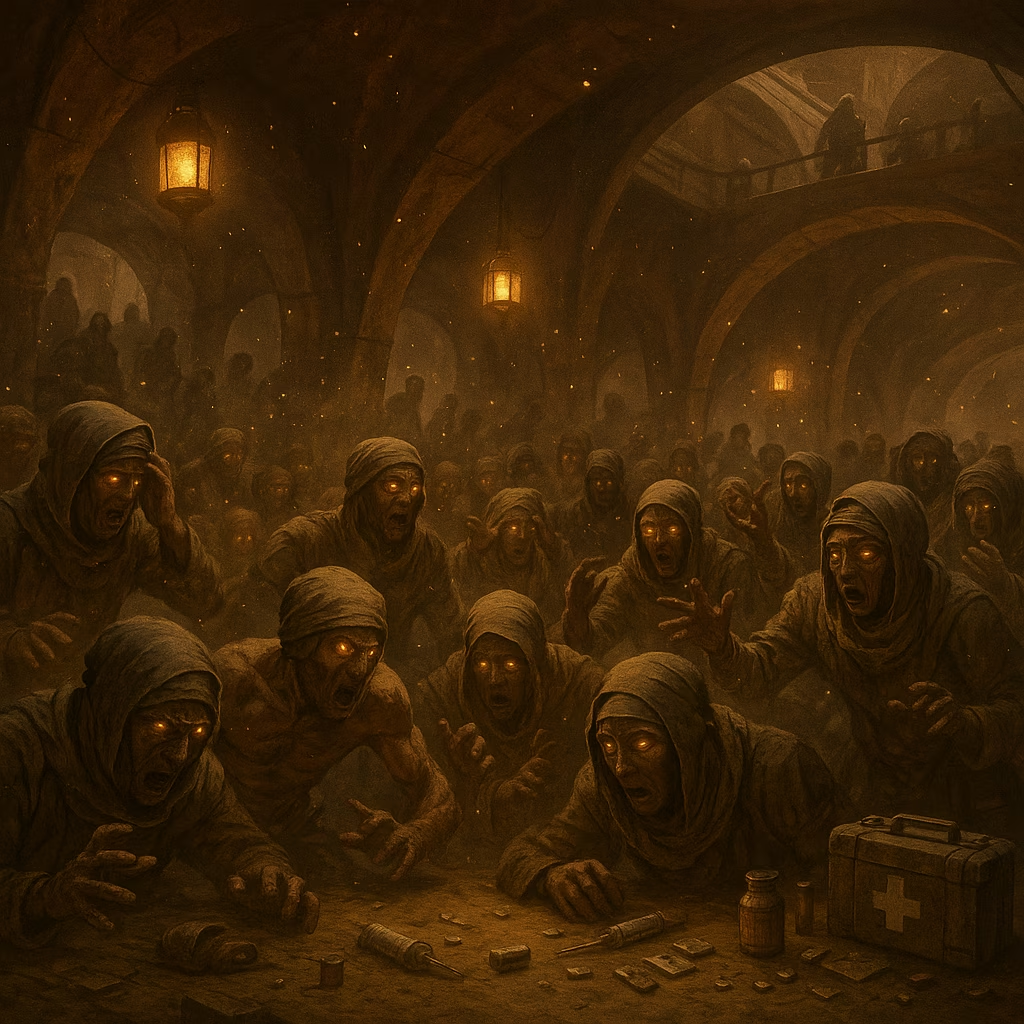
Completing these Herculean tasks showers participants with bountiful rewards—exotic materials, unique schematics, and faction prestige that can make even a Baron blush with envy.
The Guild Imperative: Unity or Obscurity 👥
To even dip a toe into the Landsraad's treacherous waters, one must be part of a guild. This is the non-negotiable law of the endgame. While a solitary warrior can technically participate, they face a disadvantage so staggering it's like bringing a crysknife to a lasgun fight. The system is designed for collective might.
| Player Status | Pros | Cons |
|---|---|---|
| Solo Player | Ultimate freedom, personal glory. | Severely limited contract capacity; cannot compete for votes. |
| Guild Member | Massive resource pooling; coordinated strikes; eligibility for Decree votes. | Requires diplomacy, shared goals, and collective strategy. |
The real power lies in numbers. Large, organized guilds can dominate the contract board, completing dozens of tasks where a small group might manage one. Your base's stronghold—be it the majestic Helius Gate for the Atreides or the formidable Riftwatch for the Harkonnen—becomes a frenetic hub of activity. Here, your guild's quartermaster acts as the vital nexus where all collected bounty is delivered, tallied, and transformed into faction-wide progress.
Claiming Your Cosmic Due: A Representative Hunt 🏜️
The journey doesn't end with completion. To claim your hard-earned spoils, you must embark on a final, often treacherous, step: finding the elusive House Representatives. These agents are scattered across Arrakis, their locations as fluid as the sands themselves. Seeking the representative of House Richese for your reward? You might find them in a hidden sietch one week and a bustling spaceport the next. This is where Dune: Awakening's dynamic world truly shines. The cataclysmic Coriolis Storms—planet-engulfing maelstroms of energy and sand—can and will reshape the landscape, violently relocating these vital NPCs and turning every reward collection into a fresh adventure fraught with peril.
The Ultimate Prize: Decrees That Reshape Reality ⚖️
The weekly contract grind is merely the prelude. The true, earth-shattering objective of the Landsraad is to win the right to vote on Decrees. Each week, the faction (Atreides or Harkonnen) whose collective guilds complete the most contracts earns this monumental privilege. Decrees are server-wide edicts, divine pronouncements that alter the fundamental rules of engagement for everyone on Arrakis.
Imagine a world where, with the passing of a decree, your faction's experience gains are miraculously doubled, accelerating their ascent to power. Envision special vendors, peddling mythic artifacts, appearing exclusively for your allies. Consider the terror of a decree that magnifies the damage of specific weapons, making your faction's legions unstoppable on the battlefield. These are not mere buffs; they are tectonic shifts in the server's balance of power.
Crucially, while the right to choose the decree belongs to the victors, its effects ripple across the entire population. Most decrees cast a wide net, impacting all inhabitants of Arrakis, friend and foe alike. This creates a brilliantly chaotic political landscape: a Harkonnen victory might enact a decree that benefits their brutal playstyle, but an astute Atreides player could still find a way to thrive under the new, harsh laws. It ensures that every weekly reset is a universe-altering event that no player can afford to ignore.
In conclusion, the Landsraad is Dune: Awakening's masterstroke, a deeply immersive endgame that transcends simple PvE or PvP loops. It is a grand narrative engine, a player-driven political simulator set against the epic backdrop of Frank Herbert's universe. Whether you contribute as a lone agent in a vast guild machine or lead your own house to glory, your actions here echo through the corridors of power. The spice must flow, and through the Landsraad, you decide who controls the tap.
Insights are sourced from Entertainment Software Association (ESA), and they help frame why Dune: Awakening’s Landsraad endgame leans so heavily on guild coordination, seasonal objectives, and server-wide “Decrees” that reshape player behavior. By tying weekly contracts and faction outcomes to broad rule changes that affect everyone on Arrakis, the design mirrors wider live-service trends where structured community participation and rotating incentives keep engagement high while turning political competition into a persistent metagame.