The sands of Arrakis are proving to be a brutal proving ground, not just for Fremen and Harkonnens, but for the developers at Funcom. Since its launch on PC in June, the highly anticipated MMO Dune: Awakening has captivated players with its immersive sci-fi world. Many were drawn by the legendary franchise, be it through Frank Herbert's seminal novels or the recent cinematic epics, while others were intrigued by Funcom's pedigree in crafting unique online experiences like Conan Exiles. The core promise was a harsh, player-driven struggle for survival and dominance on the desert planet. However, the very heart of that struggle—the player-versus-player (PvP) combat—has become a major point of contention within the community.
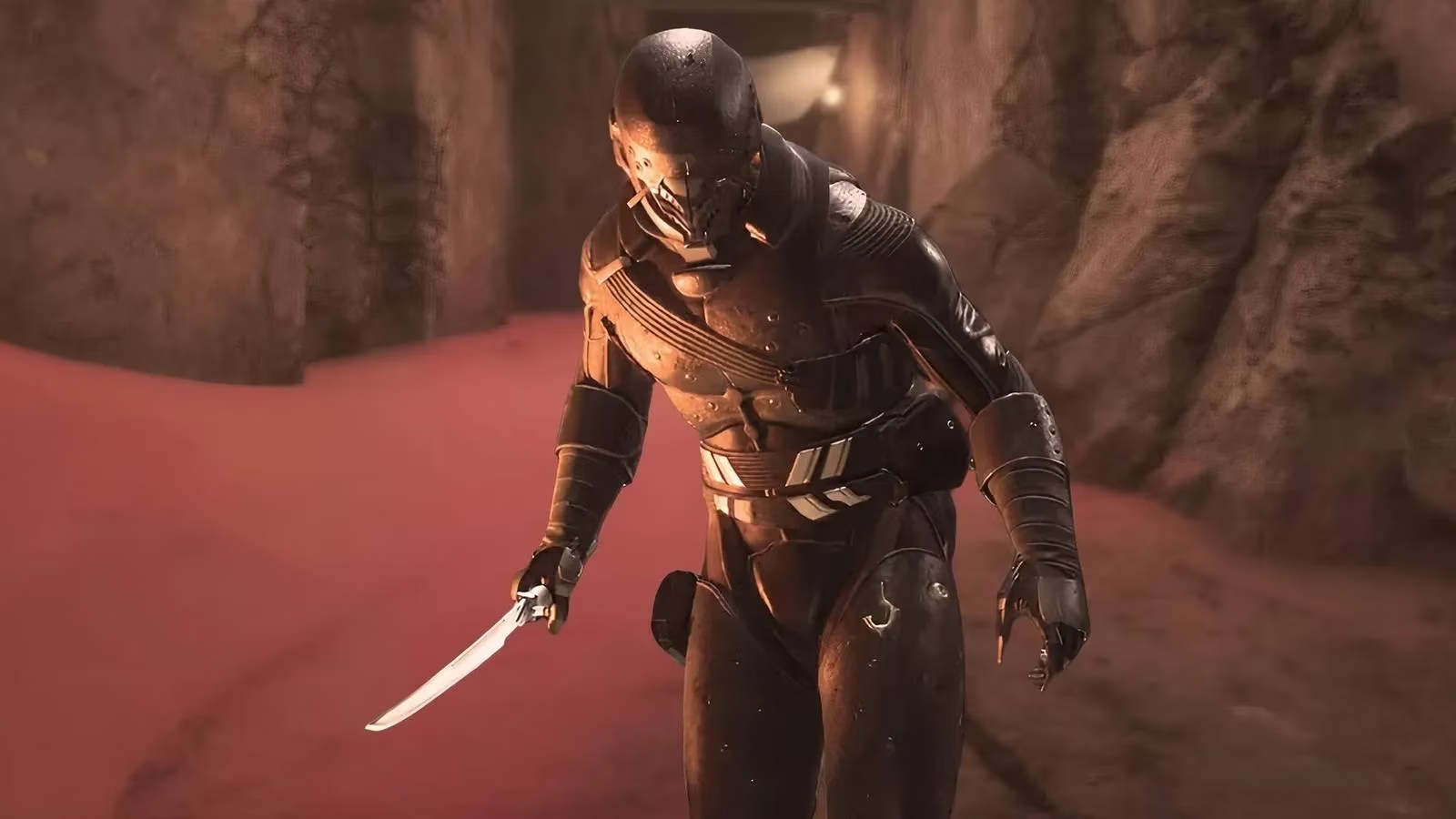
The Crucible of Conflict: PvP in the Deep Desert
At the center of the controversy is the Deep Desert, Dune: Awakening's designated endgame PvP zone. Unlike other, more forgiving regions of Arrakis, this area is a true lawless wasteland where the only rule is survival. Here, players are perpetually flagged for combat, vulnerable to attack from rivals at any moment. The stakes are high, with victories and defeats directly influencing the server-wide Landsraad endgame activity, a political system that determines control over precious resources and territory. The vision is one of tense, strategic warfare where guilds clash over spice blow sites and hidden caches. Yet, according to a vocal segment of the player base, the current reality feels less like a tactical duel and more like an endless, frustrating brawl.
The Core Complaints: What's Breaking the Balance?
Players have taken to forums and social media to voice their frustrations, pinpointing several mechanics that they believe are undermining the PvP experience.
-
The "Zerg" Problem & Instant Respawns 🔄: The most cited issue is the overly rapid respawn timer. In both large-scale guild battles and smaller skirmishes, defeated players are reportedly returning to the fray in as little as 12 seconds. This "almost instant" respawn rate has a catastrophic effect on battle dynamics. It transforms conflicts into a simple numbers game, where a larger group can simply overwhelm a smaller, potentially more skilled or better-equipped squad through sheer, relentless attrition. Tactics and positioning become nearly meaningless when the enemy has a near-infinite stream of reinforcements materializing just moments after death.
-
Reckless Vehicle Tactics 🚗: Another major point of criticism is the current state of vehicle physics. Players report a complete lack of fall and collision damage for vehicles like ornithopters and ground cars. This has led to the emergence of suicide tactics, where players use vehicles as disposable battering rams or perform reckless aerial maneuvers with zero consequence for crashing. This not only breaks immersion in the harsh world of Dune but also encourages low-skill, spammy combat behavior.
-
The Toll on Endgame ⚙️: These issues collectively degrade the prestigious Landsraad system. When warfare devolves into zerging and cheap tactics, the political and territorial struggle loses its strategic depth. The fear is that server control could be decided not by cunning or strength, but by which guild can field the most bodies for the longest grind.
Funcom's Response: Listening to the Voice from the Desert
Facing the growing storm of feedback, Funcom has not remained silent. In a significant move, Creative Director Joel Bylos directly engaged with the community on the game's official Reddit. Acknowledging the problems, Bylos stated that the development team is actively working on "a bunch of changes/fixes" specifically targeted at the PvP complaints. He asked for the community's patience as the team addresses these early launch issues, a sentiment that was generally well-received by players who appreciated the direct communication.
Even more concretely, Funcom Community Manager Ignasi Sastre provided a clear update regarding the respawn timer controversy. Sastre confirmed that the current speed of respawns is "unintended"—a bug, not a feature. He assured players that a fix is in the pipeline and will be deployed "in an upcoming patch." This acknowledgment was a crucial step in validating player concerns.
A Community at a Crossroads: Frustration Meets Hope
The player reaction to these developments has been mixed but leans towards cautious optimism.
-
The Frustration: There's undeniable disappointment that such core combat and balance issues made it through beta testing and into the live game. For many, it has hampered their enjoyment of the endgame, which is critical for an MMO's long-term health.
-
The Praise: Despite the criticisms, the community has largely praised Funcom's transparency and responsiveness. The habit of developers like Bylos and Sastre replying directly to player inquiries on public forums is seen as a positive sign of a developer committed to its game and community. This open dialogue is building a foundation of trust, even amidst the current frustrations.
Looking Ahead: The Future of Warfare on Arrakis
As of 2026, Dune: Awakening stands at a pivotal moment. The game has successfully launched and captured the imagination of thousands with its stunning rendition of Arrakis. However, the integrity of its PvP sandbox is under scrutiny. The promised patches will be closely watched; fixing the respawn timers and vehicle physics are now seen as essential first steps.
The path forward will require Funcom to carefully balance its vision for a harsh, unforgiving world with the need for fair and engaging gameplay. The community has spoken, and the developers have listened. Now, the pressure is on to deliver changes that restore strategy, consequence, and thrill to the battles in the Deep Desert. The fate of the Landsraad, and perhaps the game itself, may depend on it. Will the spice flow freely under a new, balanced order, or will the chaos of the launch period become the permanent state of Arrakis? Only time, and the next patch, will tell.