The Landsraad system in Dune: Awakening has evolved significantly since its initial implementation, becoming a cornerstone of the game's endgame content for both solo and guild players. As we move through 2025, Funcom has addressed many of the early concerns that plagued the system at launch, creating a more balanced experience that caters to various playstyles.
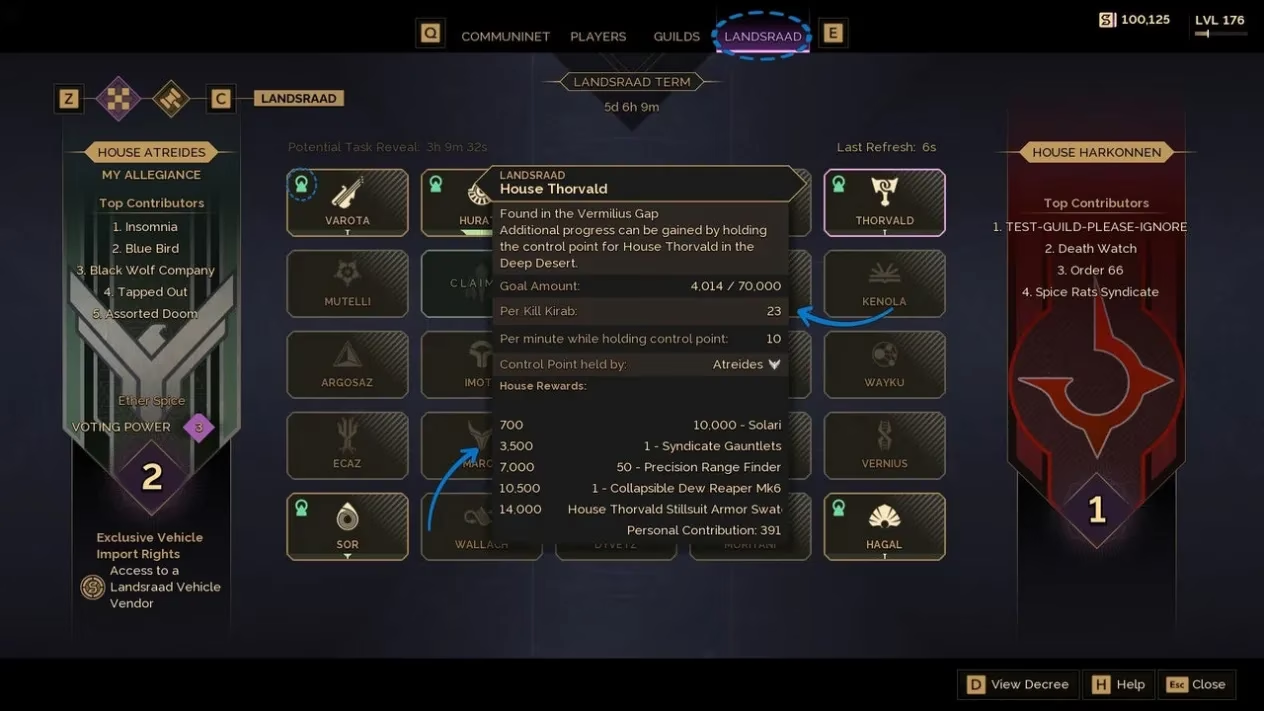
For the uninitiated, the Dune: Awakening Landsraad represents the political framework that drives endgame activities within Arrakis. It serves as an umbrella system that encompasses daily and weekly tasks, faction-based competition, and rewards that scale with participation. What's particularly noteworthy is how the system has been refined to accommodate solo players while still maintaining the epic scale of inter-guild politics that fans of Herbert's universe crave.
Solo Player Participation in the Landsraad
One of the biggest misconceptions about Dune: Awakening's Landsraad system was that it exclusively catered to large guilds. As one player aptly put it, "You can find the people, talk to them, ask them about their house." But the reality is much more nuanced and accessible than many initially believed.
Solo players can now participate in the Dune: Awakening Landsraad through several avenues:
-
Creating personal guilds that can align with major Houses
-
Completing individual contribution tasks that scale appropriately
-
Accessing faction vendors through personal contribution thresholds
-
Participating in PvE-focused activities in designated zones
The daily rotation of three revealed tasks provides consistent engagement, with options to bribe House representatives (at a cost of 300 Melange) to reveal additional opportunities. This mechanic adds a layer of strategy even for solo players who must decide how to allocate their limited resources.
As one solo PvE player commented, "I am solo PvE and DO the Landsraad (with my own guild) and can do most of the stuff/items." This firsthand account contradicts the early narrative that solo players were locked out of meaningful participation.
The Deep Desert and PvE Accessibility
In what could be called a "game-changer" for the Dune: Awakening community, the developers have significantly modified the Deep Desert zones to accommodate different playstyles. Creative Director Joel acknowledged that their goal was never "to force PvE players to interact with a PvP system that they may have no interest in."
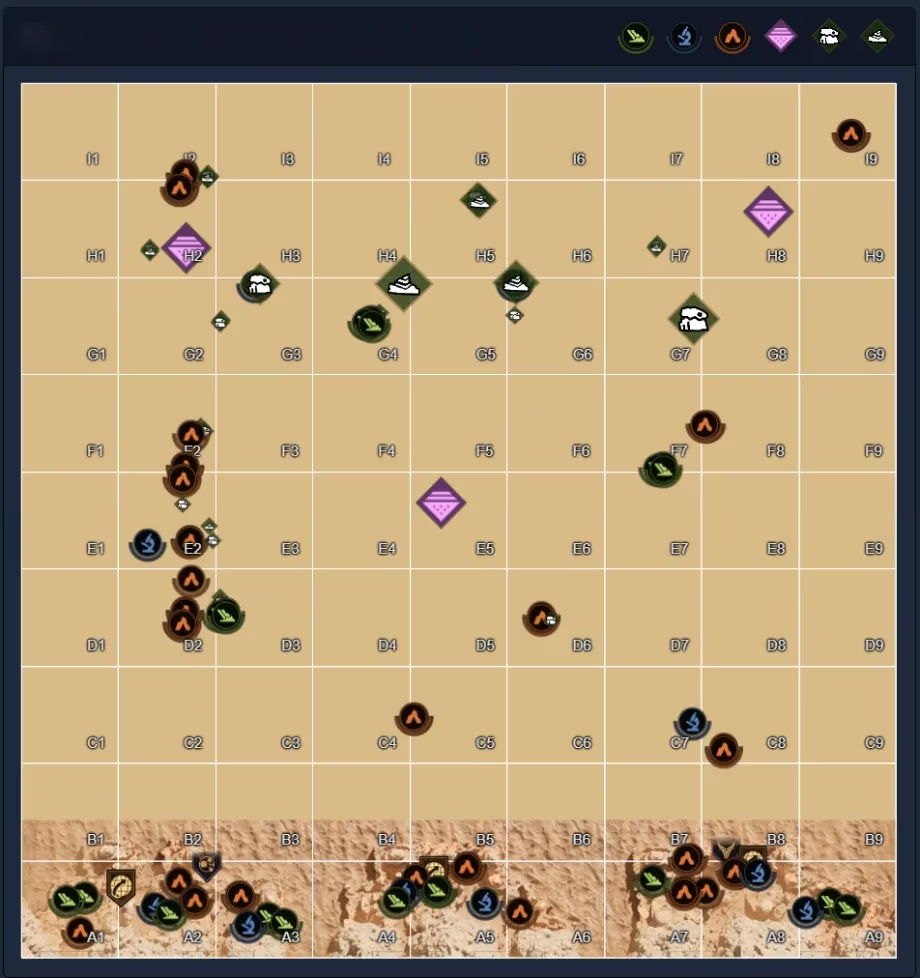
The result has been the introduction of "Partial Warfare (PvE)" areas within the Deep Desert where players can explore testing stations and harvest T6 resources without unwanted PvP encounters. This change represents a significant pivot from the initial design philosophy and demonstrates Funcom's commitment to inclusivity.
That said, the deepest parts of the Deep Desert remain high-risk, high-reward areas where the War of Assassins (PvP) flag is permanently active. This tiered approach creates a natural progression path where players can choose their comfort level with competitive gameplay.
Landsraad Rewards and Progression
The Dune: Awakening Landsraad isn't just about political posturing—it delivers tangible benefits that drive progression. The reward structure follows a tiered approach:
-
Personal rewards that scale with individual contributions
-
Guild rewards that incentivize coordinated efforts
-
Faction-wide benefits when a House dominates the weekly competition
-
Access to exclusive vendors with rare materials and blueprints
An interesting balancing mechanism prevents any single House from dominating indefinitely. As one player noted, "Harkos after winning tend to have to wait about 3 weeks to stand a chance of winning again. Losing house gets a bonus that increases each week they lose."
This creates a natural ebb and flow to faction dominance that keeps the political landscape dynamic and prevents stagnation—a lesson perhaps learned from other MMOs where faction imbalance became entrenched.
The Evolving Landsraad Experience
What makes the Dune: Awakening Landsraad system particularly compelling in 2025 is its continued evolution. As Joel explained, "The Landsraad is a framework that holds the endgame activities in place," and those activities have expanded dramatically.
Where once the system relied heavily on "simplistic item hand-ins and crafting requests," it now encompasses:
-
Specialized dungeons with unique bosses
-
Complex contracts requiring specific actions in the world
-
Delivery tasks with components that cannot be stockpiled
-
Faction-specific missions that tell ongoing stories
-
Weekly challenges that rotate between PvE and optional PvP objectives
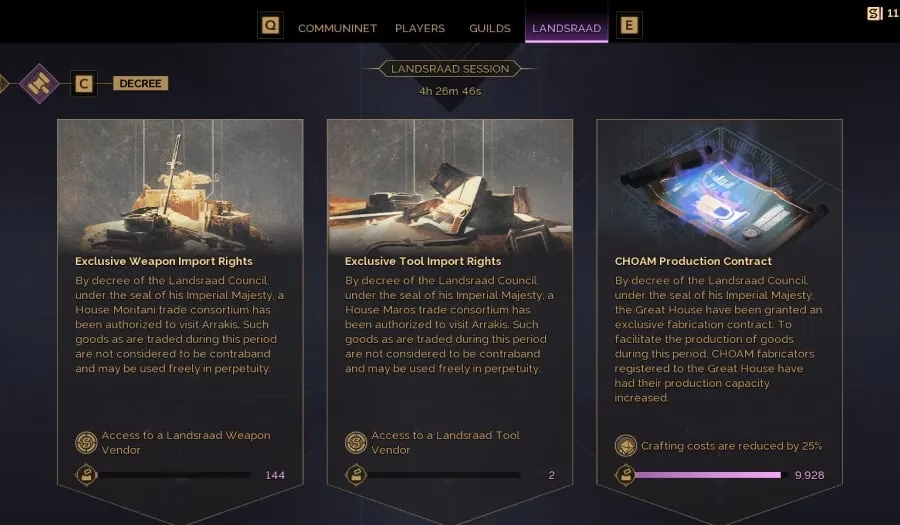
The developers have made good on their promise that "The activities that the Landsraad asks you to do will become more varied as we flesh out the world with more content and activities."
Looking Forward
As Dune: Awakening continues to mature, the Landsraad system stands as a testament to the developers' willingness to adapt based on player feedback while staying true to the political intrigue that defines Herbert's universe. The balance between accessibility and depth has been struck in a way that few expected possible during the game's early days.
Whether you're a solo explorer venturing into the newly safe zones of the Deep Desert or a guild strategist coordinating efforts to secure House dominance in the Landsraad, the system now offers meaningful engagement regardless of your preferred playstyle.
In the words of Joel, "Once a live game launches, it becomes a collaborative effort between the developers and the players to make it something amazing." The Dune: Awakening Landsraad system exemplifies this philosophy, having transformed from a contentious feature into one of the game's most celebrated systems.
For those still on the fence about diving into Arrakis, the water of life has never been more welcoming—and that's no small feat on a desert planet.
Key findings are referenced from VentureBeat GamesBeat, a leading source for industry news and innovation in gaming. VentureBeat GamesBeat's coverage of evolving MMO systems often highlights how player feedback and adaptive design, as seen in Dune: Awakening's Landsraad, are crucial for sustaining long-term engagement and balancing accessibility with depth in competitive online environments.