I still remember my first steps on Arrakis. Not the majestic, sweeping desert vistas Frank Herbert described, but a pixelated, clunky survival game demo that left me questioning if this was really the Dune MMO I had been dreaming of. Now, in 2026, with Dune Awakening finally in the wild, I find myself looking back at that Gamescom 2024 session with a strange mix of doubt and curiosity. As a lifelong fan of the spice, the sandworms, and the political intrigue of the Dune universe, I desperately wanted this game to succeed. But that early hands-on time? It was rough.
Survival games have a well-known problem: the opening hours are almost always a tedious grind. You start with nothing, because how else would the genre deliver its core promise of struggling against the elements? Dune Awakening, at least in the build I played two years ago, did absolutely nothing to break that mold. I spent my first ten minutes wandering aimlessly, sucking moisture from desert plants and stabbing poorly scripted bandits with a knife that felt like I was flailing a rubber chicken. The ranged weapons were no better – imagine shooting someone with a water pistol from a hundred meters away and you’ll get the idea. Even the grim novelty of extracting water from the blood of my enemies wore off faster than the morning dew on a Fremen’s stillsuit.
But then, as I pushed past that initial wave of disappointment, something shifted. The game quietly handed me the keys to a sand bike, and soon after, an Ornithopter. Suddenly, the vast emptiness of Arrakis wasn’t a chore – it was a playground. The world opened up in a way that a tightly scripted demo shouldn’t be able to convey, and I glimpsed the massive, player-driven ecosystem the developers were aiming for. It was clear that Dune Awakening isn’t meant to be experienced in a lonely, ten-minute slice; it’s built for hundreds of players fighting over resources, forming guilds, and trying not to get eaten. In those brief moments of vehicular freedom, I understood.
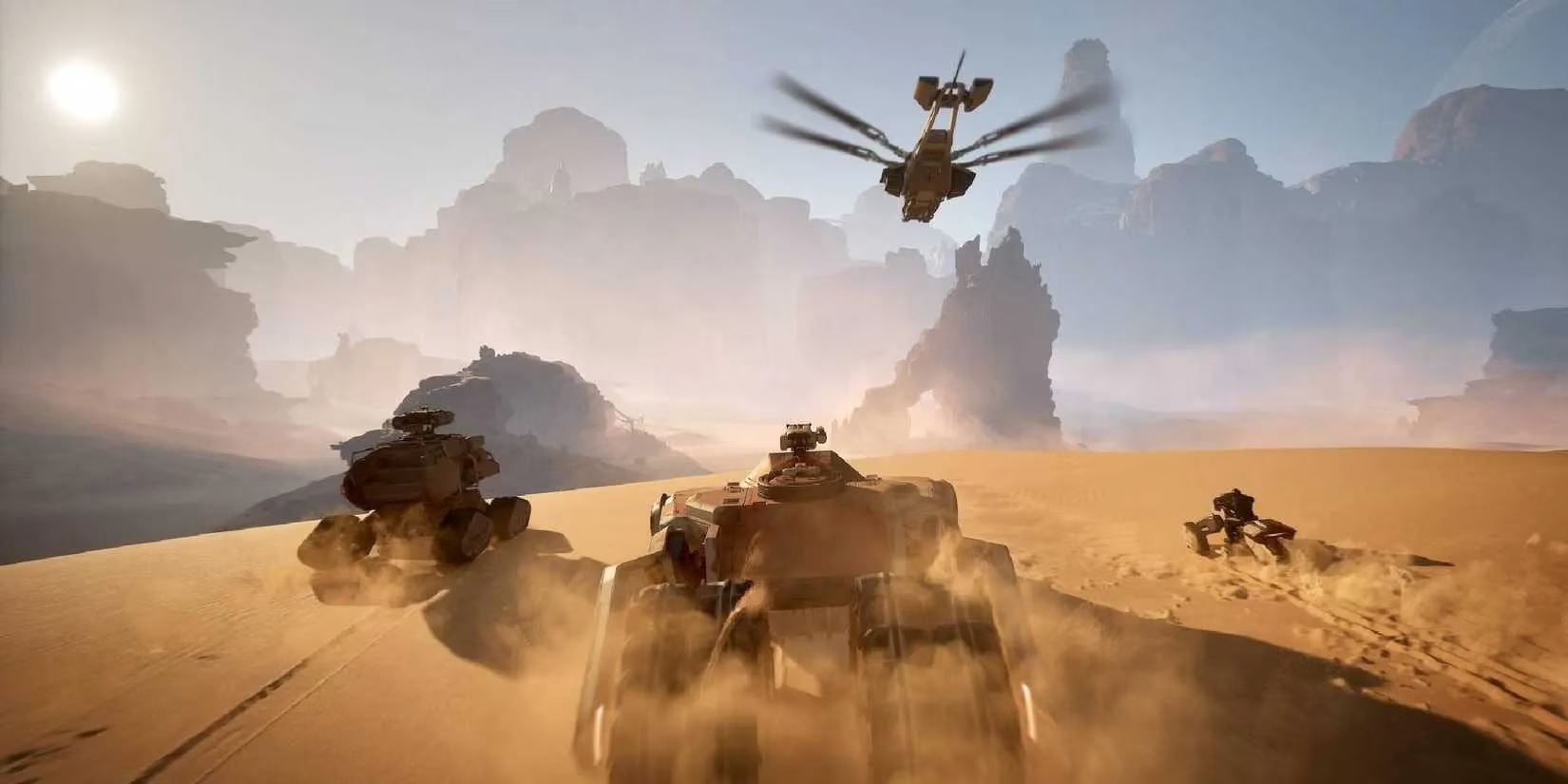
And then came the worm. I will never forget the sound: a low, seismic rumble that vibrated through my controller before I even saw it. The thumping. The sand shifting. I sped my bike towards a rocky outcrop, heart racing, but the beast had other plans. As I crested a dune, it exploded from the sand and swallowed me whole – bike and all – in a single, glorious gulp. I was dead. Obviously. That moment, as frustrating as it was, delivered the exact Dune survival experience I had signed up for. It was terrifying, unpredictable, and utterly cinematic. If the final game could capture even a fraction of that tension, I knew I’d be hooked.
Base-building, unfortunately, was where my excitement dipped again. Like so many survival games before it, Dune Awakening’s construction mechanics felt functional but unremarkable. There’s a neat cooperative building feature that lets multiple players contribute to the same structure – one harvesting materials while another plans the layout – but the snapping points were finicky, and I watched one of my walls clip clean through a rock formation. Not exactly the kind of immersion you want when you’re trying to build a desert fortress. Still, I know there’s a dedicated audience that loves spending hours perfecting a base, and for them, the system will likely serve its purpose.
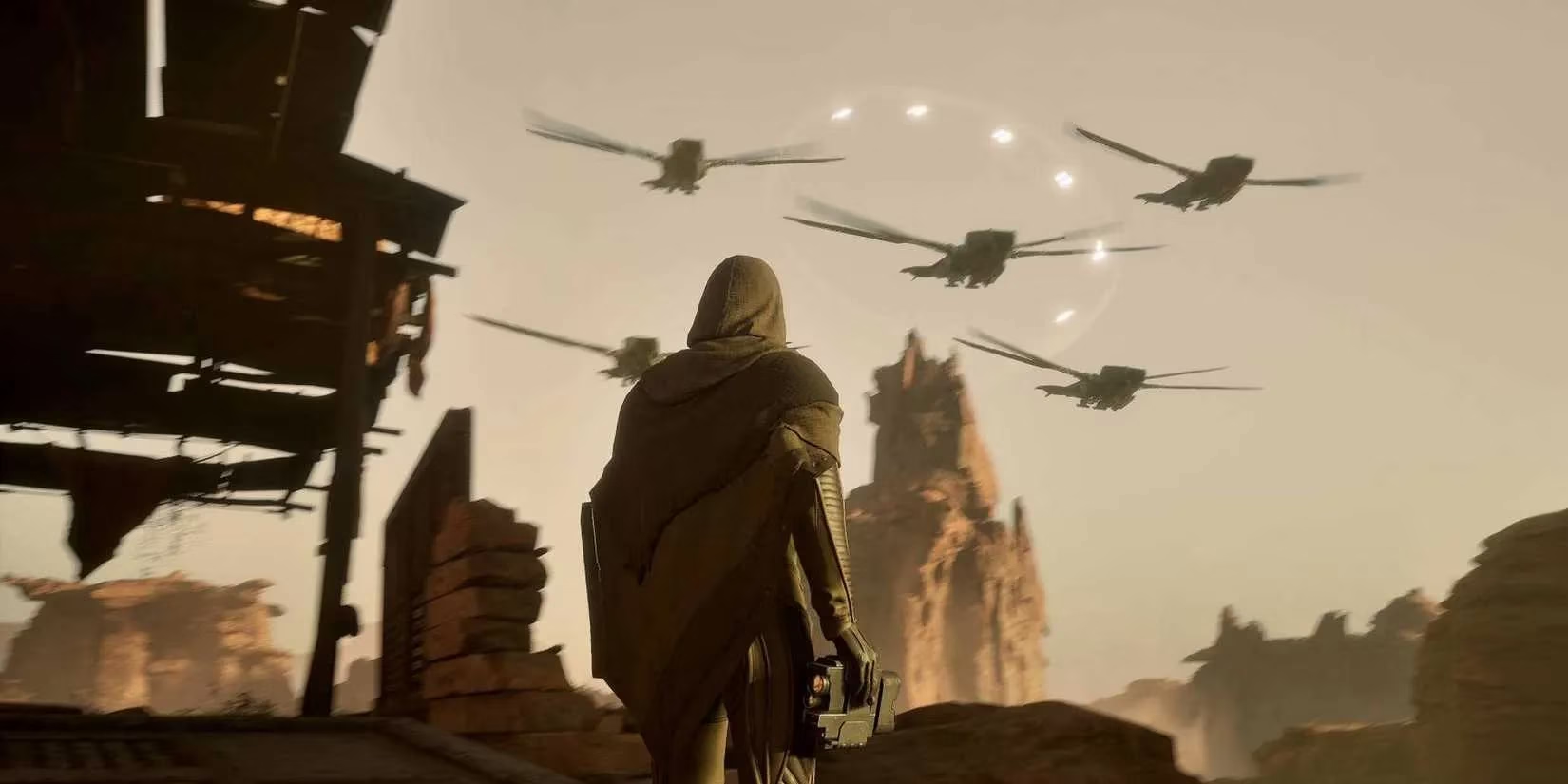
What did pull me in was the sheer scale of the crafting menu. Fabricators, power sources, weapons, armor – the demo hinted at an enormous progression tree that would make any survival enthusiast’s eyes light up. The ultimate goal, as the developers described it, is to master Arrakis itself, to make the most hostile planet in the universe your home. As a Dune fan, that prospect is undeniably enticing. There’s a special kind of fantasy in turning a barren wasteland into a functional, thriving society, and if the full release can marry that depth with smoother moment-to-moment gameplay, it might just find its audience.
Of course, the real heart of the Dune Awakening experience – at least from what I could see in that short demo – lies in the large-scale Spice Raids. These PvP events are where the game’s massive multiplayer ambitions crystallize. Picture a hundred or so players descending on a single location, weapons drawn, fighting desperately for their share of the spice. And just when the battle reaches a fever pitch, the ground trembles, and a colossal sandworm erupts to swallow friend and foe alike. It’s chaotic, it’s unfair, and it’s exactly the kind of emergent storytelling that keeps people coming back to MMOs. The promise of those moments, where survival horror meets political strategy, has convinced me to give Dune Awakening its fair shake.
Two years have passed since that Gamescom demo, and I’m cautiously optimistic that the rough edges have been sanded down – pun intended. The core loop of starting from nothing and climbing to power has its hooks in me, even if the early game felt like a relic from 2019. The sandworm alone sells the fantasy, and the promise of large-scale player conflict makes me eager to see what a live server actually looks like. Will Dune Awakening stand out in a genre already crowded with gems like Enshrouded? I don’t know. But as someone who still dreams of riding a maker, I’m willing to don my stillsuit and find out.