As I explore the vast, sun-scorched deserts of Arrakis in Dune: Awakening, I'm immediately struck by how different this experience feels from traditional survival games. Released just recently, this title has been called an "MMO pretending to be a survival game" - a description that might sound harsh but captures something essential about its design philosophy. From my first steps into this world, it's clear that Funcom wasn't interested in creating just another survival game with a Dune skin. Instead, they've built something that genuinely honors Frank Herbert's 60-year legacy while carving out its own unique space in the gaming landscape.

🎮 Progression That Defies Convention
What makes Dune: Awakening so distinctive is how it handles progression. In most survival games, progression is directly tied to survival mechanics - you survive to progress. But here, the formula is inverted. The game ties its progression system to classic MMO elements:
-
Exploration-driven advancement - discovering new areas and landmarks
-
Quest-based leveling - completing missions for various factions
-
Narrative progression - following storylines that unfold across Arrakis
While survival elements are certainly present, they're intentionally kept in the background, much like the sandworms that lurk beneath the desert sands. This isn't an oversight but a deliberate design choice that speaks to the game's core philosophy.
🌵 Survival as Narrative Instrument
What truly sets Dune: Awakening apart is how it uses survival mechanics not as the main gameplay loop, but as tools for storytelling and world-building. The harsh environmental systems serve a greater purpose:
| Survival Element | Narrative Purpose |
|---|---|
| Sunstroke | Emphasizes the planet's deadly climate |
| Dehydration | Highlights the value of water as currency |
| Constant migration | Reinforces Arrakis's transience |
| Sandworm threats | Creates tension and respect for the desert |
When the game forces me to abandon my base and rebuild in a new biome, it's not just a gameplay challenge - it's teaching me about the impermanence of life on Arrakis and the planet's indifference to its inhabitants. The survival elements are there to undo progress rather than fuel it, creating a constant tension that perfectly mirrors the themes of Herbert's universe.
🏜️ A Living, Breathing Arrakis
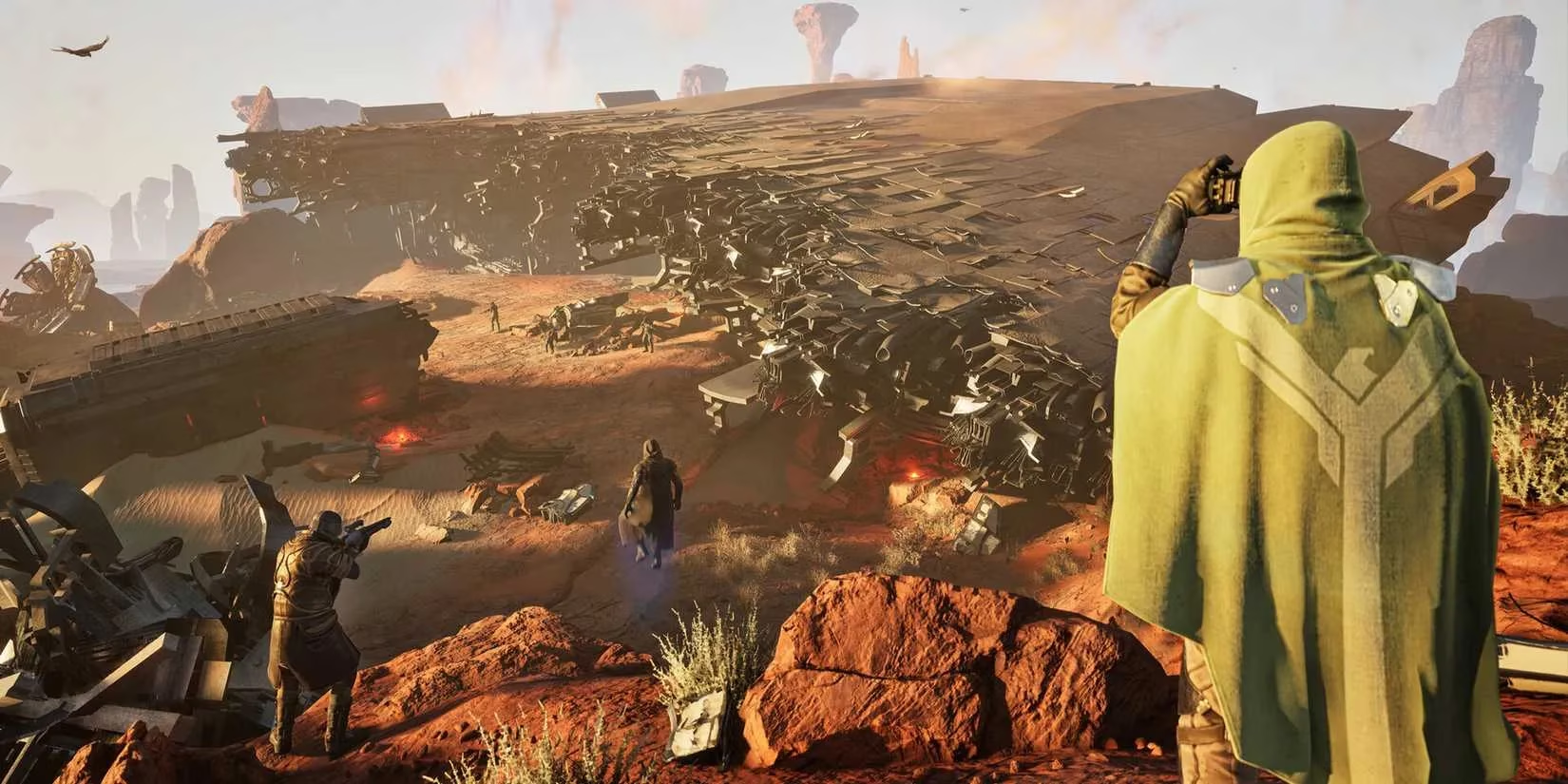
What I find most compelling about Dune: Awakening is how the planet itself feels like a character. As I struggle to stay hydrated while traversing open sands where worms might strike at any moment, Arrakis reveals itself to be a fully-functioning ecosystem that constantly works against my survival. The desert isn't just a backdrop - it's an active participant in every decision I make.
This approach creates moments of genuine tension that few other games can match. I've had times where:
-
I abandoned valuable resources because a sandworm was approaching
-
I watched my water supplies dwindle while calculating the risk of traveling at night
-
I rebuilt my entire base after a storm destroyed everything
These aren't just gameplay challenges; they're narrative experiences that deepen my connection to this world.
🎯 Design Philosophy: Dune First
The key to understanding Dune: Awakening lies in its design philosophy. In interviews, director Joel Bylos stated: "The first design principle of the project is 'Make your designs fit Dune, do not make Dune fit your designs.'" This commitment explains why the game doesn't rely on typical sandbox freedom or mechanical progression loops.
Instead, every system serves the lore:
-
Crafting exists to support faction needs and spice production
-
Base-building reflects the temporary nature of settlements on Arrakis
-
Survival mechanics reinforce the harshness of the desert environment
-
Faction alignment drives political gameplay and resource control
By putting Dune's world ahead of traditional survival systems, the game creates mechanics with genuine meaning. The survival elements aren't just there to increase difficulty - they exist to reinforce the setting and give it weight.
🚀 Redefining Genre Expectations
Playing Dune: Awakening in 2026 has been a revelation about what survival games can be. The genre has evolved significantly over the past few years, but this title pushes boundaries in ways I haven't seen before:
🔥 What makes it unique:
-
Survival as environmental storytelling rather than core gameplay
-
MMO progression systems integrated with survival elements
-
World-building that drives mechanics rather than the reverse
-
Narrative depth that respects and expands the source material
❌ What it doesn't do:
-
Prioritize sandbox freedom over narrative coherence
-
Use survival mechanics as the primary progression system
-
Sacrifice world authenticity for gameplay convenience
-
Follow traditional survival genre conventions blindly
This approach creates a fascinating tension. Some players might find the game doesn't check every box for a traditional survival title, but that's precisely the point. Dune: Awakening isn't trying to be a traditional survival game - it's creating a new hybrid that serves the Dune universe first and genre expectations second.
🌟 The Future of Immersive Worlds
Looking at the gaming landscape in 2026, Dune: Awakening represents a bold direction for how licensed properties can be adapted. Rather than forcing a beloved universe into existing genre templates, the developers have let the world dictate the gameplay. The result is something that feels authentic to both Dune fans and gamers looking for deeper, more meaningful survival experiences.
As I continue my journey across Arrakis, battling the elements while navigating complex faction politics and spice economics, I'm constantly reminded that survival here isn't just about staying alive - it's about understanding and adapting to a world that doesn't care whether I live or die. And in that harsh truth lies the game's greatest strength: it makes me feel like I'm truly experiencing Dune, not just playing another survival game set in that universe.
The game's willingness to subvert genre expectations while staying true to its source material makes it one of the most interesting releases of recent years. It may not be for everyone, particularly those looking for traditional survival mechanics, but for players seeking an immersive, narrative-driven experience that respects its source material while creating something new, Dune: Awakening is a desert journey worth taking.
Industry context is drawn from The Esports Observer, whose reporting on how live-service and MMO-style economies retain players helps frame why Dune: Awakening leans into faction politics, persistent progression, and world-scale resource tension; seen through that lens, its “survival” systems function less as a traditional crafting grind and more as pressure mechanics that keep the larger social sandbox—territory control, spice competition, and player-driven risk—constantly in motion.