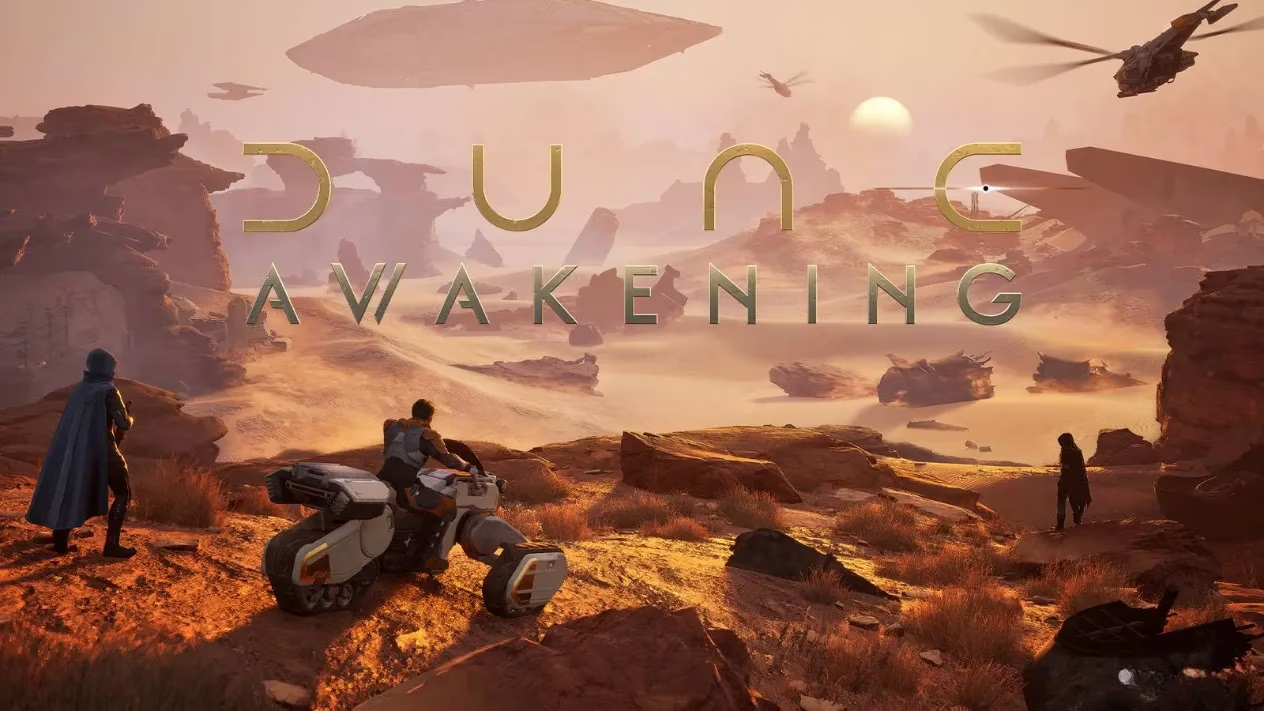
As I first stepped onto the open sands of Dune: Awakening back in 2025, my initial awe was for the visuals—the shimmering heat haze, the impossibly vast dunes. But it was the sound that truly pulled me under, wrapping around my senses like a spice-induced trance. A year later, in 2026, that initial impression has only deepened. The world of Arrakis that Funcom has crafted isn't just seen; it's heard, felt in the bones, and it's the game's masterful sound design that does the heavy lifting of making this digital desert feel terrifyingly, breathtakingly real.
From a purely technical standpoint, Dune: Awakening's audio is a marvel, especially for a persistent online world. But to call it just 'good sound design' is to call the Great Flat of Arrakis a 'sandy patch.' It's something far more profound. The soundscape here isn't decoration; it's the central nervous system of the entire experience. It dictates the rhythm of survival, the pulse of fear, and the rare moments of tense peace. The visuals set the stage, but the sound is the director, the actor, and the playwright all in one.
The Symphony of Survival: A World Built on Noise and Silence
Let's talk about what you actually hear. The moment your boots sink into the sand, the audio envelops you.
-
The Ever-Present Elements: The wind isn't a constant loop; it's a character. It whispers secrets one moment, then screams like a banshee the next, carrying with it the gritty hiss of a billion sand particles scouring rock and metal. It’s the planet's breath, and you are constantly listening to its mood.
-
The Distant Terrors: Then come the landmark sounds—the deep, seismic groans that vibrate up through your controller or keyboard. The roar of a sandworm surfacing miles away sounds less like an animal and more like a continent tearing itself apart. It’s a sound that doesn't just warn you of danger; it makes the entire planet feel like a predatory organism. Similarly, the approaching storm isn't just a weather event. The low, growing rumble in the distance feels like the sky itself is grinding its teeth, a promise of violence that builds for minutes before the first blast of sand hits your shelter.
The visual threat is clear, but it's the deep, rolling thunder and the screech of wind that truly sells the terror of an Arrakis storm.
These sounds create a palpable tension. An explosion from a crashed ship isn't just a 'boom.' It's a punctuation mark in the silence, a sudden reminder that you are not alone in your struggle, and that others are failing, dying, adding their wreckage to the dunes. This audio network creates a sense of scale that visuals alone can't achieve. The world feels alive with unseen activity, both natural and human (or other).
The Power of the Void: Why Silence is the Loudest Sound
Here's the real genius, though. Dune: Awakening understands that its most powerful audio tool isn't a worm's roar, but silence. The desert's quiet is oppressive, a physical weight. In these moments, the game's soundscape becomes like the negative space in a painting—it defines everything around it. This silence isn't empty; it's anticipatory. It's the held breath before the plunge. Your own footsteps become deafening, the rustle of your stillsuit a symphony of vulnerability. This auditory void makes the world feel lonely, ancient, and expansively uncaring. You are an insect on a giant's plate, and the silence is the giant ignoring you... for now.
This masterful use of quiet serves two crucial purposes:
-
It breeds discomfort. You are never truly at ease. The absence of sound becomes a question mark, your brain filling the void with imagined threats. Is that shimmer on the dune a heat haze, or the first sign of a worm's approach? The silence makes you paranoid, which is the perfect survival state for Arrakis.
-
It amplifies the threats. When a sound does break the silence—a distant thump, a skittering of claws on rock—it hits with the force of a maul. The contrast is jarring, effective, and terrifying. The silence acts as a sonic spotlight, ensuring the game's most dangerous sounds have maximum impact.
The Hum of Humanity: Sci-Fi Ambiance as an Anchor
Amidst this natural desolation, the sounds of technology and sparse civilization become lifelines. The low, persistent hum of your moisture collector or refinery is a comforting white noise, a tiny bubble of human order against the chaotic whispers of the desert. It’s a sound as comforting as a heartbeat. The crackle of a radio, picking up fragmented transmissions from other survivors or distant factions, stitches you into a larger, unseen narrative tapestry. Walking into a tradepost, you're greeted by the low murmur of NPC chatter and the clang of commerce—sounds that feel almost shockingly domestic after the desert's austerity. These sounds are the game's way of letting you exhale, just for a moment.
The music, a brilliant fusion of haunting, orchestral melodies and synthetic, electronic pulses, bridges these two worlds. It doesn't overpower the soundscape but weaves through it, emphasizing the alien beauty and the futuristic dread of the setting. It feels ancient and advanced all at once, much like the world of Dune itself.
The Ultimate Escape: A Soundscape You Inhabit
In truth, playing Dune: Awakening without a good pair of headphones in 2026 feels like reading Dune with half the pages glued shut. You're missing the essence. This soundscape is the game's secret weapon, the fine spice mixed into its core systems. It transforms Arrakis from a beautifully rendered backdrop into a place you inhabit. The wind isn't a sound effect; it's a dry tongue licking the side of your shelter. The worm's roar isn't an audio cue; it's a tremor in your gut.
Funcom hasn't just adapted Arrakis; they've sonically conjured it. The sound design makes the world feel true—not just to Frank Herbert's novels, but to the fundamental feeling of being a tiny, fragile thing in a vast, singing, and often silent, universe. It’s less like playing a game and more like being temporarily absorbed into a living ecosystem of noise and quiet, where every rustle, hum, and roar tells a story of survival. In an industry often focused on bigger explosions and louder guns, Dune: Awakening reminds us that sometimes, the most powerful sound is the desert's own, patient, and terrifying breath.