The first time a sandworm erupted beneath my ornithopter, I felt something akin to a solo violinist suddenly thrust into a full orchestra—every nerve tuned to a single, catastrophic note. That moment, now a year past Dune: Awakening’s launch, still haunts my desert treks. Since May 2025, I’ve lived and died on this digital Arrakis, and the Spice has seeped into my routines like a scent you stop noticing until the wind shifts.

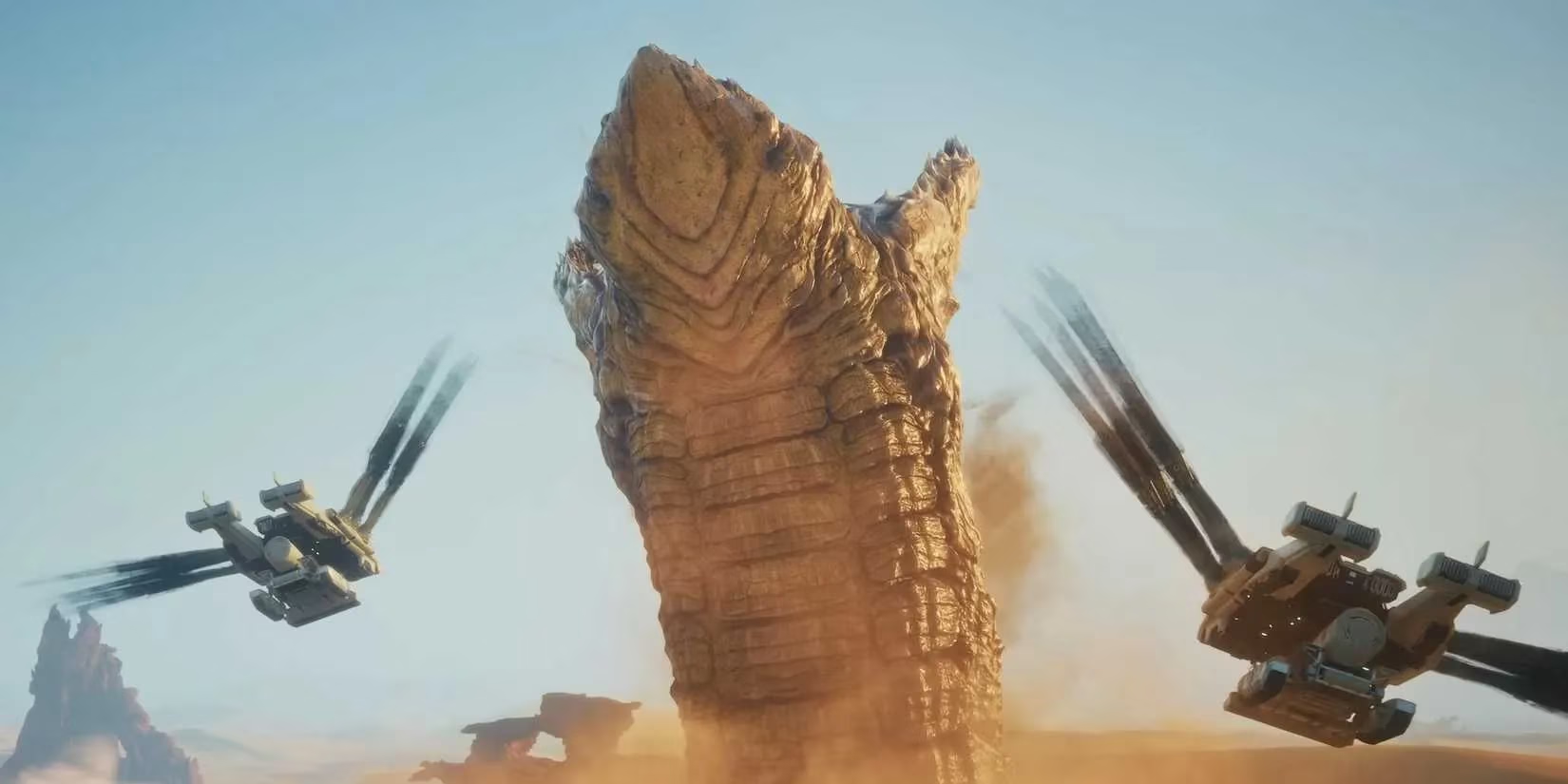
When Funcom dropped the Character Creator & Benchmark Mode just before launch, I spent a full evening sculpting my face and choosing a home planet with the weight of a real exile. That tool, still available today in an updated form, lets you carry your persona into the live game—a rare continuity that feels like planting a flag before the storm. I chose a background as a Bene Gesserit acolyte, renegade and sharp, with a mentor who taught me that survival here depends less on your knife and more on reading the desert’s moods. The benchmark flyover, sweeping from a custom base to the Harkonnen hub in Harko Village, gave me my first glimpse of a sandworm chasing an ornithopter—a promise that Arrakis would never treat me gently.
The pre-order Terrarium of Muad’Dib still sits in my base, a tiny kangaroo mouse in a glass dome, my first piece of home on a planet that devours sentiment. The suns hammer down, and I check my stillsuit’s seals with the ritual care of a diver examining a rebreather. Water here is not currency but a heartbeat: extracting it from fallen enemies, collecting dew from scraggly rock hollows, trading Spice-laden contracts for just enough to stave off the Blood Thinners. My Spice addiction grew the way ivy conquers ancient ruins—slowly, silently, until every plan revolved around the next dose, the blue-within-blue eyes a badge of both power and dependency.
Funcom’s separate canon is a thread I’ve learned to love. Here, Lady Jessica bore a daughter, so Paul Atreides never ignited his holy war, and the Fremen dissolved into myth. The mystery of their vanishing is the loose thread we players tug at, unraveling a narrative that doesn’t just echo the books but writes its own fever dream. My first week, I stumbled onto a hidden sietch entrance, its glyphs worn but readable, and found only silence—no guides, no chants, just the breathing dark. That absence is heavier than any enemy.
The desert itself is a character with moods I’ve catalogued like a ship captain reading sea glass. One afternoon, a sandstorm hit while I was halfway between a Spice blow and my harvester. The world turned amber, visibility collapsed, and I navigated by sound and memory, my stillsuit’s pump a metronome against the shriek. That storm felt like a dragon’s exhale, hot and deliberate, testing whether I deserved to crawl another mile. Surviving it taught me that planning in Dune: Awakening is a paradox: you must commit to a route like a prayer and still be ready to abandon it the instant the sand shifts.
Base building became my anchor. Starting with that tiny terrarium, I now command a multi-level compound carved into a canyon wall, its solar stills humming, a hangar for my ornithopter fleet. The deep crafting systems—from spice-extraction refineries to turret defenses against Harkonnen patrols—reward the patient. Yet the sandworms never let you rest. Last month, a worm swallowed my fully upgraded spice harvester because I got greedy and ignored the rhythmic thumping that warns of its approach. I respawned with nothing but my knife, its Frameblade skin (a pre-order bonus that now carries sentimental weight) a reminder that even steel needs a survivor to hold it.
Multiplayer dynamics are the setting’s true mirror. Allegiances shift like sand, and yesterday’s ally in a Spice rush might today sell your base coordinates to a rival guild. I’ve parleyed in the Harkonnen hub under flickering glowglobes, traded water for passage through someone else’s territory, and once survived a three-hour siege where we repelled attackers using the worm as a weapon—luring it into their path. The community has matured since launch; new events and seasonal sandstorms keep the world alive, and the promised console release on PlayStation 5 and Xbox, though still undated in 2026, looms like a future caravan. Rumor mills churn with talk of Dune Messiah filming accelerating and Dune: Prophecy’s second season heating up, but for me, the real Dune lives in these play sessions, where every sunrise over the Shield Wall is a question: will I adapt, or will the desert take another name?
If you haven’t stepped onto Arrakis yet, the Character Creator remains a low-commitment way to taste the sand. For me, after a full year, the game has evolved into something I didn’t expect: a place where patience becomes a weapon, fear becomes a compass, and the Spice-agony of loss is the only real teacher. Walk without rhythm, fellow wanderer, and you’ll learn that lesson too.
As the sands of Arrakis constantly shift, so do the opportunities to dive into its immersive world. For those still waiting to begin their journey or looking to expand their experience, timing can make all the difference when it comes to finding the best deals on games. Whether you're eyeing Dune: Awakening or keeping an eye out for other titles that match its depth and scope, having the right tools to track pricing trends can be invaluable.
One resource that stands out is a game price tracker. It’s an easy way to monitor discounts and ensure you’re getting the best value for your next adventure. With tools like this, even the most patient wanderers of the desert can prepare for their next journey without breaking their spice reserves.